The Bible Talk: Part 1
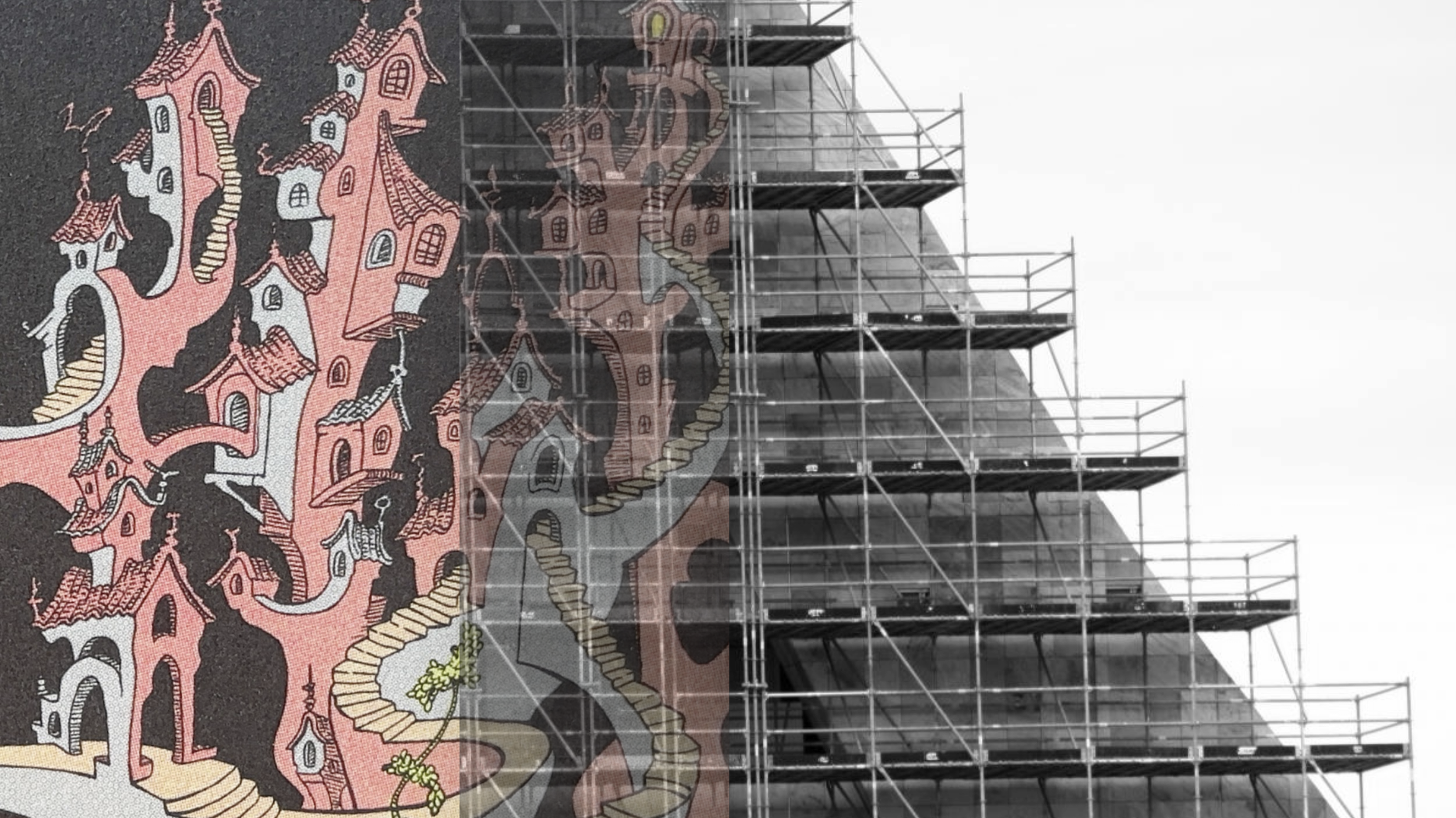
Note: This and the following two posts comprise a (slightly revised) manuscript for a lecture I gave on the Bible in The Forum at Truman State University on February 24, 2026. Please enjoy the long read whenever you can settle into it.
Preface: 26 Years In
I started taking the Bible seriously when I was 16 and won $200 at youth group because I memorized the text of Exodus 20 verbatim. A good way to make money, I figured.
26 years later, I wouldn’t say the money is spectacular, but I have come to love the Bible. Not in the way I loved LeAnn when we were 18, totally overlooking any problems or possible doubts, but the way I love her now, at 42. Sometimes I am frustrated. Always I am fascinated. Sometimes I see the Bible with breathtaking clarity and the next moment I am utterly confused. But, for better or for worse, till death do us part, I am committed. I love it.
Over the years I have spent countless hours reading it and about it, talking about it, preaching hundreds of sermons from it. I’m on a podcast. I co-wrote a book. All the while I have been building a perspective on it, beliefs about what it is and how it works and what it’s for and how best to engage it. Like constructing an engine while driving.
People have heard my sermons, listened to my episodes, and read my words, all of which have been generated from my view of the Bible. But often the engine itself stays under the hood, so to speak. Yes, I talk about it in smaller groups or one on one. I invite people into my garage, show them what’s under there. But I do not try to diagram it for the masses. Why?
For one, I think the power that comes from it is more important than any schematic I could draw of it.
For two, because of the fact that my views have shaped themselves over a long time through much struggle (and rejoicing!), I think it would be unkind to simply unload everything on others, fire-hose style. They should be able to take their journey as I have mine.
For three, I leave it under the hood because, as we know, the Bible itself can be a hot-button issue, a pressure point, and I generally prefer to talk about those sorts of things in spaces where people can talk back and we can engage each other with the nuance and complexity that these things deserve.
And four, because I don’t want to give the impression that I think that it’s terribly important that everyone simply knows what Reed thinks. I don’t. I am not an expert. I don’t have the best thoughts or words about this. I don’t even claim that what follows has no holes in it or leaves no questions unanswered.
But in the last 26 years I have found a lot of fascination, joy, and deep life breathed back into the text as I have explored more about what it might be and how it might work — something that has required confronting some frightful possibilities (what if nothing is true??), but the Lord and my friends have seen me through.
And so now I’ve come to feel that it’s time to open the hood in a more public space simply because I hope (and think) that others might benefit from getting a look at my engine. I’ve seen a lot of folks struggle under a sort of oppression I know well. One where, with the Bible being presented as it was, I felt myself forced into a position of having to choose between faith and honesty.
If I am honest about what I really think about this passage, that means I do not have faith.
And if I really have faith, I must put away my honest questions. I must posture as though I accept answers that I don’t actually believe. Don’t believe not because I arrogantly presume to simply know better than God or some nonsense like that, but because I just cannot square these answers with my experience and everything else I know about the world.
I know that snakes don’t talk. What do I do then if, on the one hand, I can’t bring myself to believe that one did speak in a garden called Eden while on the other I still find myself compelled by and drawn to and questioned and loved by the God who walked there in the cool of the day? Maybe there is a better way to understand the Bible that lets faith and honesty live together.
Maybe Karl Barth was onto something when, after a lecture, upon being asked by a lady if it was true that the snake actually spoke, he said, “Madam, it doesn’t matter whether or not the serpent really spoke; all that matters is what the serpent said.”
It’s this kind of thinking that has opened up a rich well for me, and so, when it comes to this Bible Talk, I only hope to be able to help anyone who feels like I’ve felt, unable to shake curiosity and frustration and a deep, deep love, to be able maybe for the first time in a long time to take a deep breath, to be breathed into, and to dive deeper than before, without fear, joyful, inspired.
So, tonight, here’s what we’re gonna do:
In the first part, we’re gonna talk about what the Bible is.
Then we’re gonna talk about some things it says.
Then we’re gonna talk about what we do with it.
And something some people say about it.
Then we’re gonna talk about what it says about itself.
Then in the second part, we’re gonna ask what the Bible authors were trying to communicate.
Then we’re gonna wonder about the best way to communicate that. (
And be curious about the relationship between truth and facts.
And then we’re gonna consider the power of stories.
Then we’ll end by asking what the point is.
And after the end I’ll do a p.s. about some helpful tips for reading.
Ok let’s go.
I: Seuss Town (What It Is)
Imagine you are wandering alone across a wide plain. Rolling hills, nice grass, mostly featureless. A wide open sky. You don’t know where you got started. Or When. Hours ago? Centuries? But all the same, there you are, walking.
And then, as you come up over a hill, you see this sprawled out in front of you:
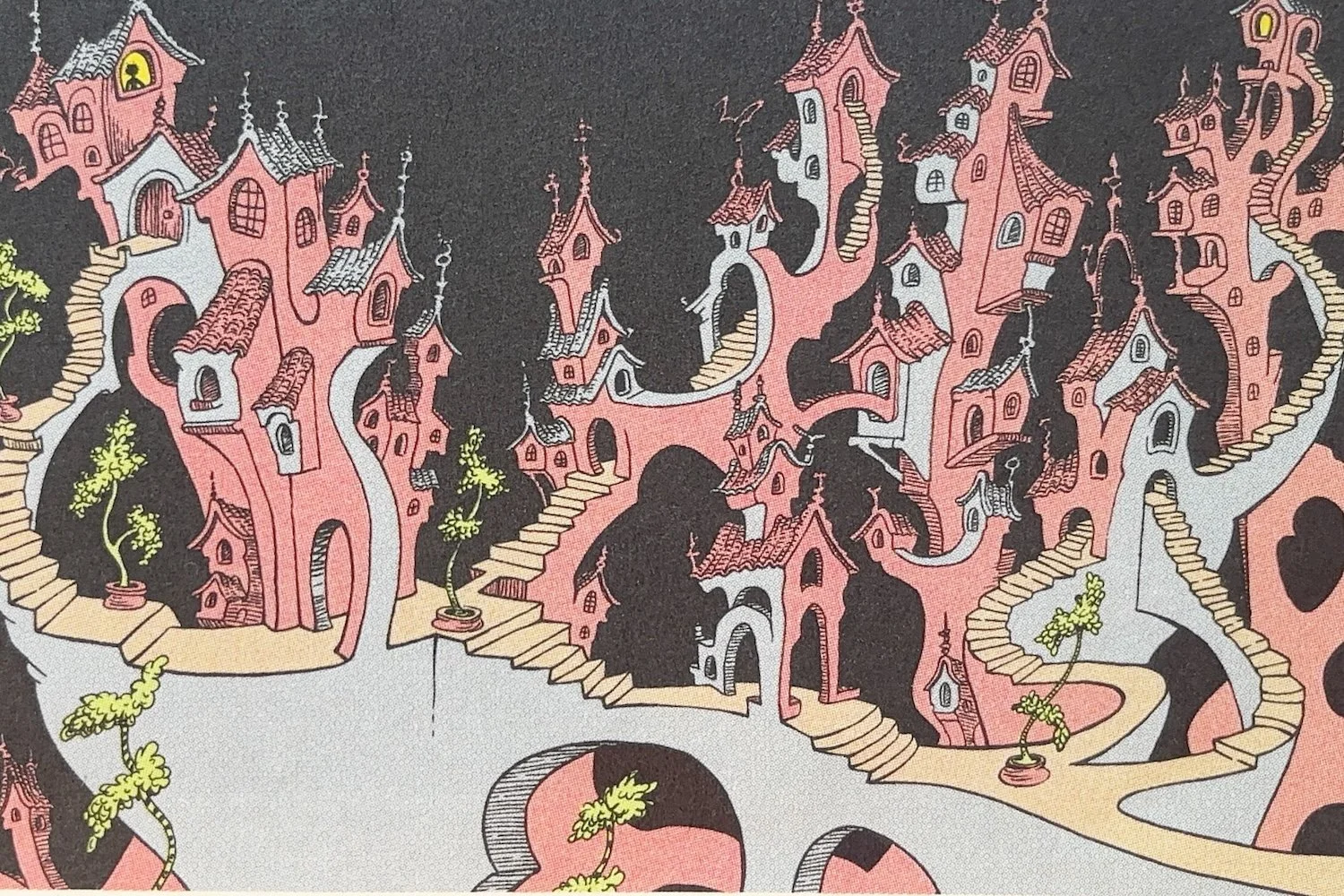
A bizarre, impossible structure. Straight out of Dr. Seuss. Towers jutting out wildly here and there. Staircases rising unsupported over thin air. The whole thing twisting and splaying and curving back in on itself in an unruly and beautiful whole.
This is, of course, the Bible. What makes it so Seussian?
Written more than two millennia ago in three ancient languages, 66 books (at least in our version) authored —well, to be more precise: told, written, edited, and curated — by many dozens if not a hundred different people from the other side of the world, over a period of more than a thousand years. And though we call it a book it is actually more like a library of all kinds of books. There are laws, historical annals, political dramas, erotic literature, epic poems, songs, prophetic rants, satires, letters from the pastor, and more. And these books did not drop out of the void of outer space; they emerged from eras of history on earth, textured by the rise and fall of kingdoms, wars, calamities, foreign religions, changing ideologies.
If that already sounds like a lot, think of it like this:
Imagine taking Dietrich Bonhoeffer’s Letters and Papers from Prison, written in German under the Third Reich in the 1940s,
and Shakespeare’s King Lear written in early modern English under the monarchy of King James in 1606,
and Beowulf written by who knows in Old English in the year 1000 after centuries of existing only as a tale told out loud,
and then smashing them all together in a single volume about God and human nature and history and how they all thread together.
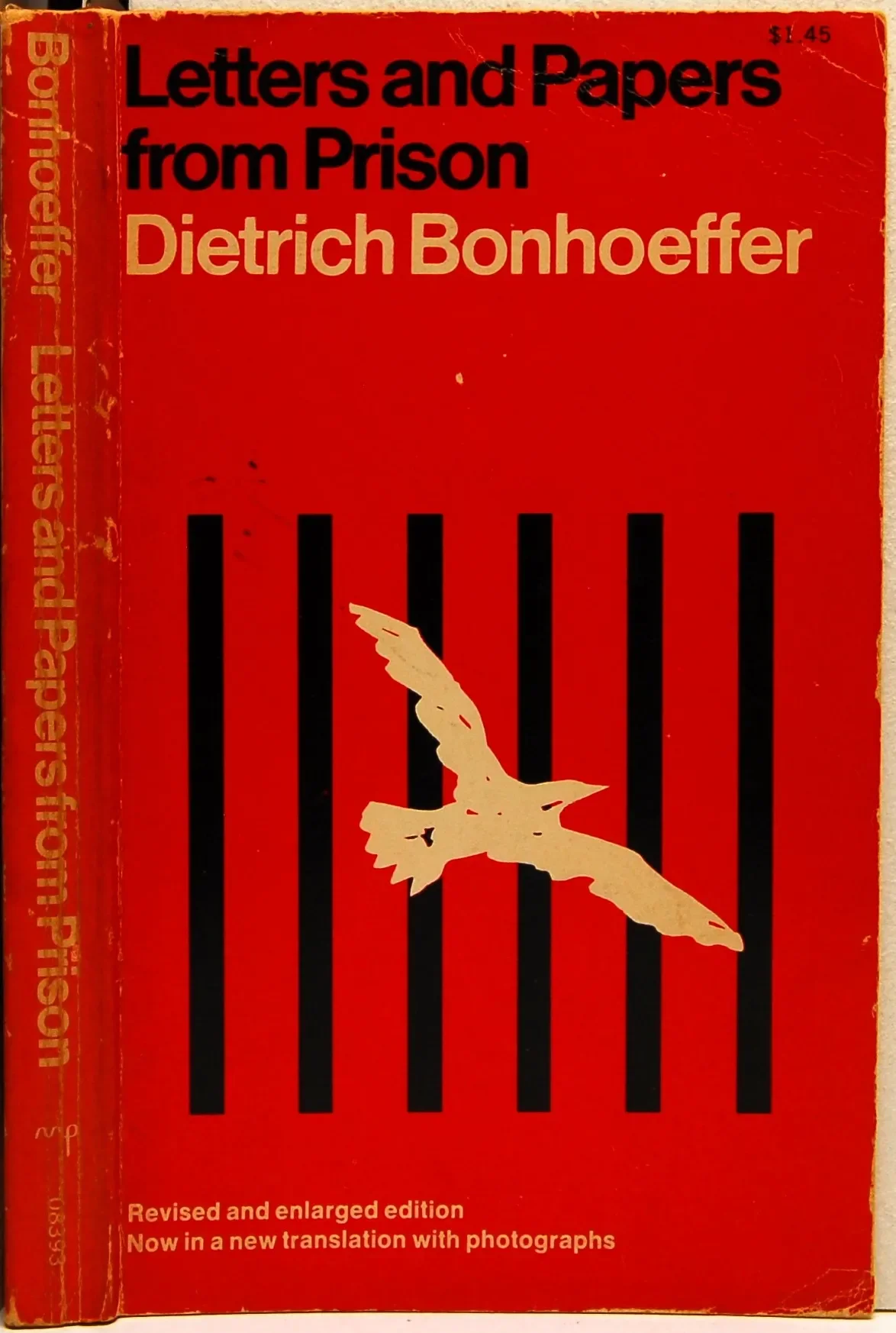

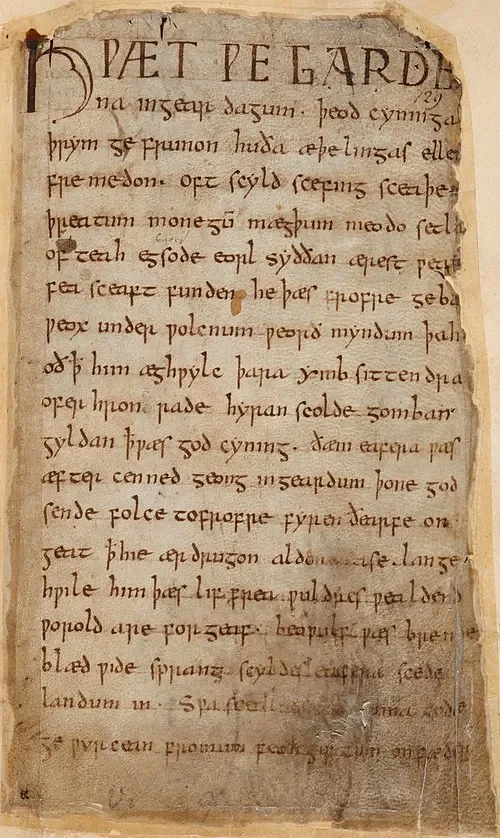
And now imagine you are from Mexico 500 years from now, sitting down to read it.
Yes, you would absolutely have to rely on someone expert enough to turn German and Old English into Spanish, but it wouldn’t just be the language that needed translation; you’d probably also benefit a heck of a lot from folks who could decipher the context and the genres, as well.
It would, after all, in a distant future, be difficult to grasp the full meaning of Bonhoeffer’s letters if you were oblivious to the existence and significance of the Holocaust.
Or imagine the disappointment if you were to go searching the British annals expecting to trace the lineage of a king named Lear.
This is essentially the position we are in as modern readers of the Bible.
II: Kaleidoscopic Conversation (Some Things It Says)
And there’s still one more complex and at times seemingly impossible thing beyond the background details and linguistic technicalities that makes this structure as delightfully wonky as it is, and that is, of course, what the words themselves are saying, no matter what language they’re in. Rejoicing, lamenting, singing, shouting, arguing, declaring, reporting, interrogating, encouraging, chastising. The Bible’s word on God and humanity can be dizzyingly kaleidoscopic.
Consider just this slightly overlong, single-paragraph survey of what we read on its pages.
Like how there is nowhere David can go to escape God’s presence in Psalm 139, but no matter where Job goes, God is absent. In Isaiah God knows the end of things right from the start, but in Jeremiah He admits some disappointment that Israel didn’t come back to Him like He thought she would. In Nahum God is ready to wipe even the memory of the Ninevites from the earth, but in Jonah He has to convince the runaway prophet they should be pitied because they have no idea what they’re doing. In one psalm David is knit by God in his mother’s womb, but in another he is conceived in sin. The wisdom of Proverbs is that you reap what you sow, but Ecclesiastes says the righteous die early and the wicked live long and that’s just the way the cookie crumbles sometimes. Adam and Eve manage to hide from God behind some tree leaves, but Paul tells the Greeks that in God they live and move and have their very being. God is a whisper to Eljiah and a fiery volcano of trumpets to Moses.
Sometimes even the so-called straightforward stuff doesn’t line up. 2 Samuel says that God told David to conduct a census, but 1 Chronicles says it was Satan. 1 Samuel says Goliath was killed by David but 1 Chronicles says it was someone named Elhanan that did him in.
All of this adds up to something truly Seussian, and yet, we believe, we detect, we trust that it is nevertheless a single whole with one God strolling and thundering and hiding and seeking and judging and rescuing across its pages, not just in a dead past but somehow even in the living present through them.
But do you start to get a sense of why simply insisting, “I believe what the Bible says,” may ring loud but sounds brittle, like crashing two trash can lids together? The Bible says lots of things, sometimes in a way that creates tension. Marty Solomon proposes shifting our conception of the Bible from an inspired book to an inspired conversation, a whole company of biblical texts talking back and forth to each other, which I like because it opens up more and better questions than simply “what it says” like: what it says by whom, to whom, in what language, in what way, at what point, under what circumstances, and why?
Rightly discerning the answers to these questions of course then takes an immense amount of energy and effort and thought and dialogue.
III: Scaffolding (What We Do With It)
So here we are, standing before our Seuss Town in all its baffling splendor.
And in a collective effort to understand this structure, scaffolding is built.

A solid place from which to stand and get a closer look. Now we can reach this bizarre structure’s heights and examine its nooks and crannies. We are giving ourselves an apparatus to help us understand how this thing works, who designed it, who built it, what it means, what it’s for.
This scaffolding is the long and varied traditions of studying, interpreting, and engaging the Bible. It’s the sermons your pastors preached and the commentaries they read to prepare them. It’s seminaries and the scholarship they produce, the theologies they develop. It’s podcasts. It’s books by your favorite Christian authors.
It’s not always so formal, though. Because some have found that a more systematic scaffolding won’t always do, they weave rope ladders or throw out swinging bridges instead. It’s the arts: the immense wealth of paintings and poems and music that have been created to dive into the Bible’s depths. It’s our practices of prayer and meditation and sacrament. And memorization and proof-texting and tshirt-emblazoning.
It’s also the beaten paths we ourselves wear in the ground all around and in and out of this Seuss Town. It’s the conversations you have late at night or over coffee or on hours-long aimless walks around town trying to figure things out.
All of this surrounding the Bible itself is our collective effort to make sense of it. And I want to say that scaffolding is not a problem! Everyone has a framework, a way of holding texts and beliefs together. It’s inevitable. And in fact, it’s good! But it’s very hard. And by this point it seems that we’re never going to reach consensus on the right way to read it or do it.
So why haven’t we just abandoned it already? Why can’t we wanderers ever seem to just quit this weird building and walk away? I think because we find it more than just a fascinating design; it’s because so many wanderers have found this Seussian structure to be mysteriously alive. We find not only an unimaginable piece of architecture but within it a kind of gravity, a magnetism drawing us in, not only intriguing us but transforming us. It’s way more than an intellectual exercise.
But there’s a caution we should heed in our pursuits: wanderers have by now put up so much scaffolding that it threatens to swallow up the Bible itself.
Imagine future generations of wanderers, coming up over that hill centuries after you were ever there, only instead of seeing the original Seussian wonder, they see this instead.
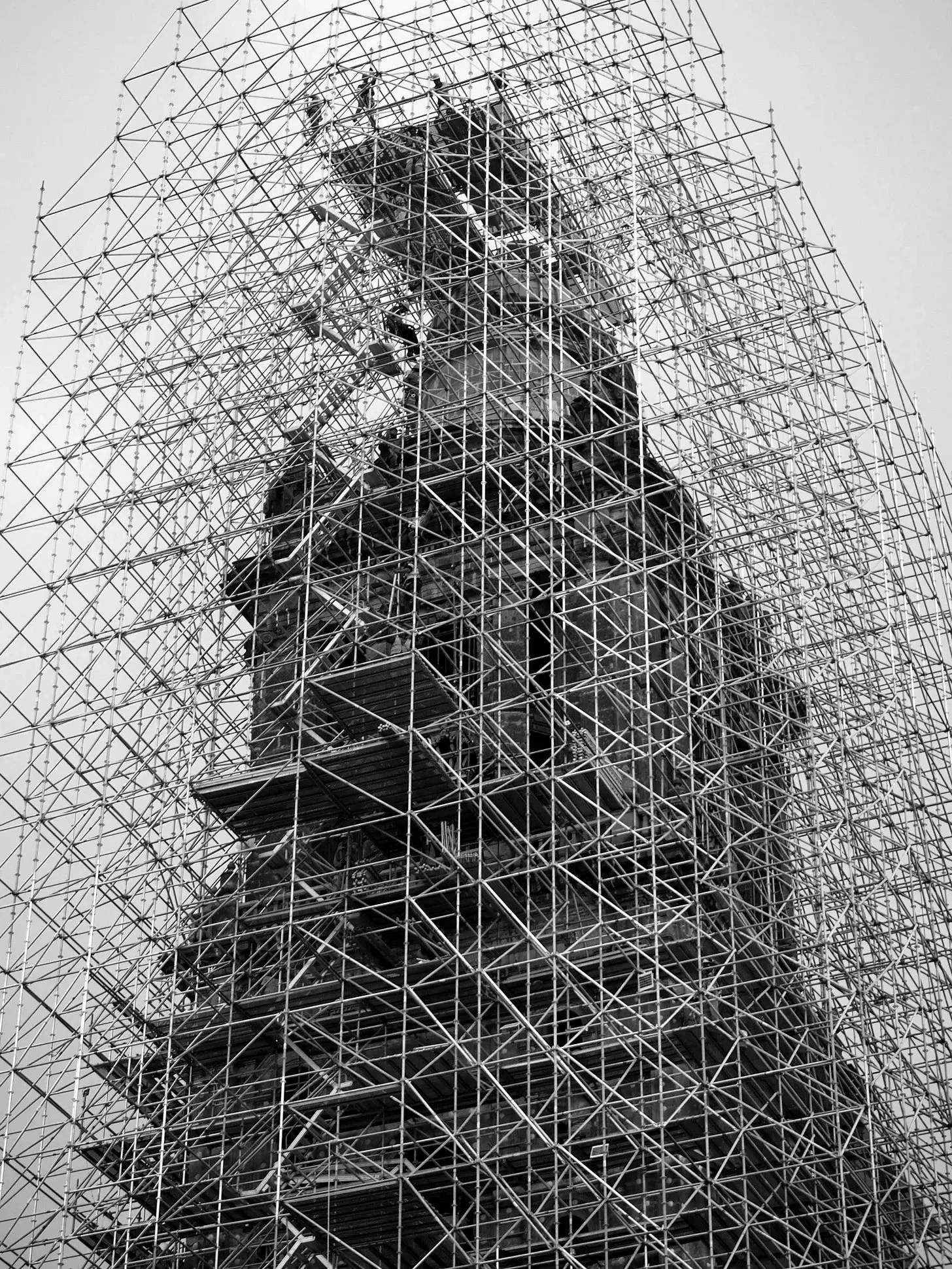
It would be like only ever studying commentaries, or Christian books, or listening to worship music, or reading your favorite Christian author’s theology. You can come to think that the scaffolding is the building. The things people say on the scaffolding — that God is omniscient, for example — start to be thought of as things the Bible directly says, even when they’re not.
You can even get to a point where you think that the Bible and all its messy tensions couldn’t possibly stand up on its own without the straight, reliable lines of our scaffolding. That the Bible actually needs our interpretations to keep from collapsing. If God isn’t omniscient, then his promises are unreliable!
Again, hear me: constructing ways of understanding and connecting the various wings of our Seussian Bible doesn’t always yield wrong extrabiblical conclusions nor is it inherently bad by any stretch— it’s inevitable and necessary if we are to try to live it and live with it. But it does become a problem when we start bulldozing the Bible’s tensions — like Jeremiah 3’s And I thought, ‘After she has done all this she will return to me,’ but she did not return… — by quickly retreating to the (supposedly) structurally sound components of our scaffolding — we know God is omniscient — forcing the Bible inside its lines even as we claim to be people who simply believe what the Bible says.
What would it look like for us — for you — to wrestle with the tension undeniably present, for example, between Isaiah’s claim that God knows the end from the beginning and Jeremiah’s portrait of a God for whom things didn’t turn out like He thought? If God is to be found inside our wonky Seuss Town, would insisting that we must ultimately settle on a final answer be like permanently setting our scaffolding in a concrete foundation and moving in there, settling for being merely God’s (perhaps distant) neighbor?
What if instead we had the courage to remain forever engaged with the text itself and all its tensions? Through curiosity, through arguments, through speaking and listening, and more? Would that be like actually moving in with this dynamic, living God, more like family than estranged neighbor?
IV: Ironclad Admission (Something Some People Say About It)
I once attended a lecture by Ken Ham, founder of Answers in Genesis, where he opened by telling the audience that if they did not believe that the universe was created in six literal 24 hour cycles, they could not believe that Jesus died on the cross for their sins.
Which is perfectly exemplary of the final layer to our Seussian analogy: we find ourselves in a time where a certain way of defining the most essential attribute of the Bible has become a premise that, according to some, must be accepted if we are to be able to believe the Bible at all.

It’s a sort of wall built all around Seuss Town with an ironclad gate that must be passed through and that its keepers claim permits you direct access to the true word of God. No need for any scaffolding, for what any “human opinion” says about the thing.
This gate is not an interpretation of Scripture but an assertion about it that, more or less, the author of scripture is God in the sense that, though it obviously required human hands to put ink on scrolls, He so totally entranced the human writers so as to make them nothing more than sorts of possessed court stenographers, transmitting only exactly what God dictated to them. The human element all but erased from its significance.
And so it follows in this view that the Bible, being authored by God in this way, cannot contain inaccurate data of any kind, indeed must contain only perfectly correct facts about the past, future, and afterlife that could only be explained as the product of divine dictation.
The Bible becomes God’s lab report, history book, disclosure of the future, schematic of salvation.
I only want to point out that the structure this gate leads to seems very different from the one we actually have. The assertion of the undiluted divine perfection (whatever that means) of the text takes you, in the end, not to Seuss Town but through a tunnel that sort of burrows around Seuss Town, missing it completely, and spits you out at something like this.

No longer diverse, unruly, tense, and dynamic. But static. Every book flattened into a square box. The Bible becomes a concrete apartment building made up of more or less identical units that do the same thing in the same way — transmit perfect God data via a historically accurate record of otherwise unknowable information about the past (history), future (prophecy) and the afterlife.
All or nothing, as Mr. Ham said.
This is what many seem to have in mind when they use the words inspired and inerrant. Inspiration becomes immediately and inextricably connected to accuracy.
And a fear is introduced: if it’s inspired, it’s factual. If it’s not factual, it’s not inspired. If it’s not inspired, it’s not true.
But is that what inspired means? And is a factual inaccuracy an error? And are truth and facts the same thing? Can stories tell the truth?
V: Theopneustos (What It Says About Itself)
At this point, perhaps some of you are feeling uncomfortable, and let me take a moment to say that I completely understand that discomfort. “Reed, are you saying the Bible isn’t true?” That discomfort is largely the reason why I have always chosen to have this sort of complex conversation behind closed doors, where we can talk together. But let me assure, briefly: yes, I believe the Bible is from God, and yes, I believe it is true, but I want to consider what we actually mean when we say that.
Maybe a good place to start, now that we’re 3,418 words in, is with what the Bible has to say about itself (which actually isn’t very much). Does the Bible call itself inspired? Well, pretty close. Does it say that it is inerrant? No, that word is nowhere in there, and the concept as I suspect many people mean it isn’t really in there, either. (But that doesn’t mean the Bible isn’t true! To that we’ll come in part two.)
For the present, though, inspired.
Perhaps the Bible’s most heavyweight verse is John 3:16. You know it. For God so loved the world…
But there is another 3:16 that is also a heavy hitter — 2 Timothy 3:16. If you have ever gotten into a conversation with a Bible nerd or apologist, etc., you have heard this verse. Here it is in the ESV:
All Scripture is breathed out by God and profitable for teaching, for reproof, for correction, and for training in righteousness…
Now, it’s not very controversial to say that scripture is profitable or valuable for teaching, correction, etc. But it’s the first adjective there that we’re interested in — breathed out by God — that perhaps has come to take on some inferred meaning that’s not really there.
The NIV translates it “God-breathed,” the NRSV says “inspired,” and the King James went way out on a limb and decided to go with “given by inspiration.”
The word in the original Greek is one compound word: theopneustos.
All scripture is theopneustos.
Theos is God.
And pneustos is breathed. As in pneumonia.
So the best literal translation is the NIV — “all scripture is God-breathed.” But what does that mean?
Do something with me. Take a deep breath. What do you notice?
Breath goes in. Breath goes out. It’s multidirectional. Two things.
My question then is should we think of theopneustos as “breathed out” or “breathed into”? Is there a difference? What would the author of 2 Timothy have thought? What are the implications of thinking of the Bible as a thing breathed out by God vs. as a thing breathed into by God?
I imagine we typically mean something more like “breathed out by” in the way we speak of the inspiration of the Bible. Something like the sense of Isaiah 55:11:
So shall my word be that goes out from my mouth; it shall not return to me empty, but it shall accomplish that which I purpose, and shall succeed in the thing for which I sent it.
That is, we imagine the Bible as a thing exhaled by God directly and immediately into the form of the pages of our Bibles. God breathes out and your NIV Bible falls from the sky. Like breathing onto a cold window pane to make a haze appear. What is manifest is the unalloyed word of God, laid plainly upon the medium of the writer’s words. The emphasis, then, in thinking about theopneustos in this way is on the divine essence of the text. It is straight from God. The writer is just a medium.
One wonders, though, if Paul wanted to convey something like a pure divine authorship of the text, why he didn’t choose a different Greek word that meant something like “to create under divine possession in a fit of ecstasy,” the way pagan oracles would speak from the gods.
And in fact there was just such a word readily available to Paul: entheos (literally “god within”), from which we get the word enthusiast, which used to carry more of a “religious fanatic” flavor than merely someone who was really into baseball cards.
But Paul chose theopneustos — “God-breathed.”
What if he didn’t have in mind something like a possessed courtroom stenographer copying down an immaculate transcript of exhaled divine information?
What if Paul meant something more like “breathed into”?
Paul being a Jew steeped in the Hebrew scriptures, you have to wonder if there was anything else from the Bible swirling around in his brain that he thought would make a good comp for thinking about what scripture is like.
Can you think of something else in the Bible that had God’s breath breathed into it?
That’s right. Adam.
Then the Lord God formed the man of dust from the ground and breathed into his nostrils the breath of life, and the man became a living creature.
There is the very earthy, human thing that is Adam. Skin, bones, blood, hair. Smells weird. Dirt under his fingernails. God doesn’t simply breathe him out — voila! — whole and perfect (again, whatever that would mean). He takes a thing formed from the dirt and literally inspires it — injects breath into it and, extremely importantly, it becomes alive. And it becomes alive for a purpose: to be fruitful and multiply, to work and keep a garden. In other words: to make more life in the world that God has made.
And so what if we were to think of Paul’s use of theopneustos as something more like “All scripture is breathed into by God,” or the slightly wordier Reed paraphrase, “All scripture is made alive by God to be life-giving”? Both inspired and inspiring.
Rather than breathing onto a frozen piece of glass, it is like John Coltrane breathing into a saxophone; the saxophone becomes a tool for receiving and transposing his breath into sound, into color (if you’re a synesthete), into life. And the human-made aspect of it is not incidental but essential to what it does.
To start making a bunch of claims, then, about the thing being perfectly factually inerrant because it is breathed into by God would be like insisting that “A Love Supreme” or “Giant Steps” wins. It’s a category mistake. We’re taking the conversation in the wrong direction.
Maybe, like Adam, the human part of the scripture is thoroughly entangled in the God part. Not merely human, not simply divine. (It kinda starts to sound like the incarnation, doesn’t it?) What would that then mean for our expectations of what the Bible must or mustn’t do, how it must or mustn’t communicate, and what it’s here for? Maybe there are better questions to be asked, and better answers to discover.
