The Bible Talk: Part 2
VI: Data Conveyor Belt? (What The Bible Authors Were Trying To Communicate)
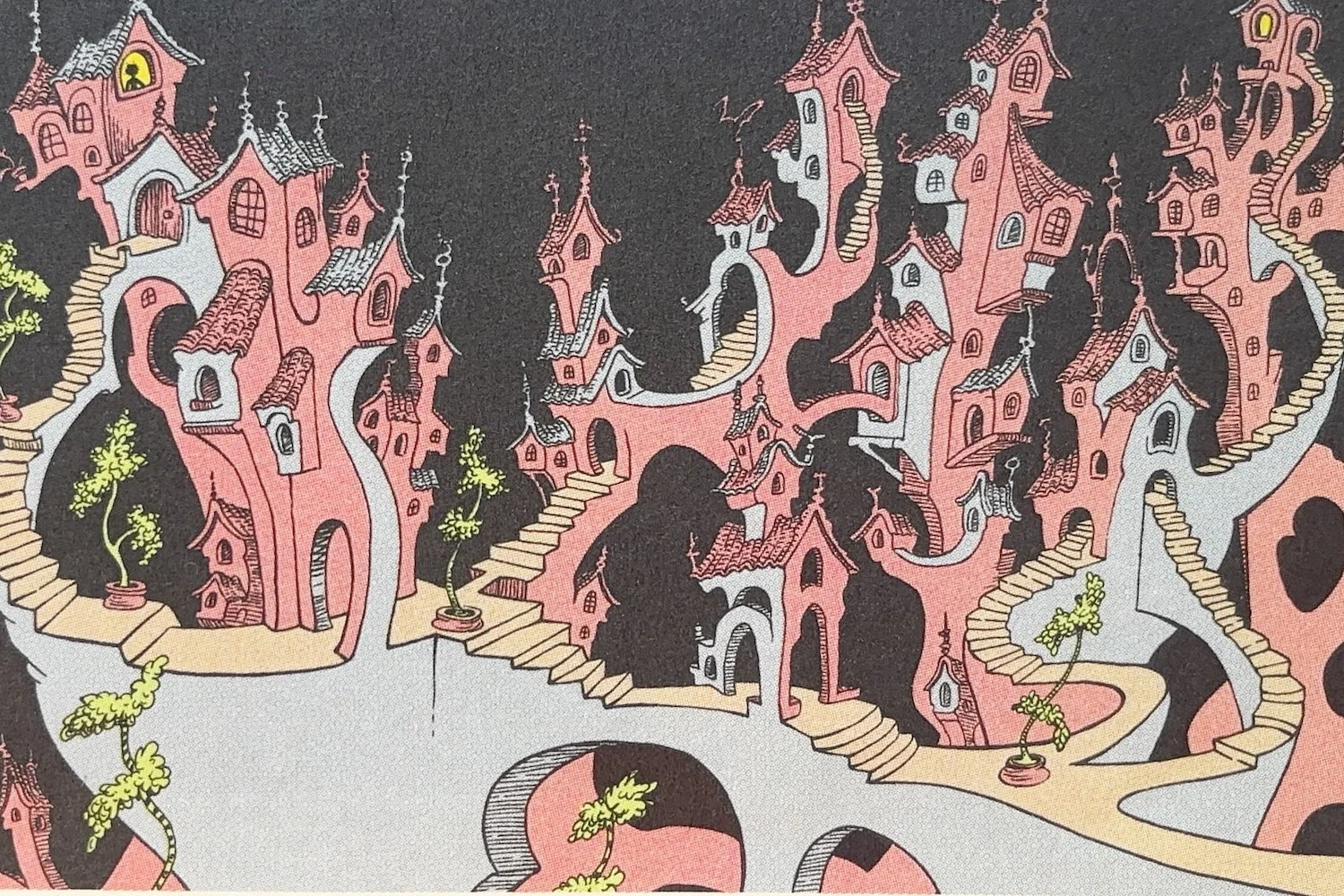
So, Seuss Town, a collection of many types of things by many people talking back and forth to each other across changing times and circumstances, and yet mysteriously whole: revealing and navigating and questioning and proclaiming the truth of the story of God’s heart and action with humans. Who God is. Who we are. His creation and call and rescue of us and all the many complications along the way. All these accounts breathed into by God, made alive in order to be life-giving.
It’s up to us now to start wrestling.
A good first question is: why did this biblical author feel it important to write this down? (Note that the concrete-apartment-view of the Bible minimizes or downright dismisses this question. Authorial intentions, hopes, and dreams are irrelevant. They wrote it down because God told them to.)
And for a long time I answered that question by way of an assumption that the writers of the Bible were like (my assumption of) scholars writing theology books: someone sitting down in their study to relay an already complete, clear, and systematic set of information about God. The Bible was a sort of conveyor belt carrying crate after crate of God Data up the mineshaft from their hidden theological storehouse, where they had already figured out a cleanly logical schematic of God, to me. They sat around thinking through things, having epiphanies at their desks, then they loaded up the crates and shipped them off.
My job was to unpack them, read the blueprints, and start assembling a worldview and life application.
Then I read Frederick Buechner writing about doctrine.
No matter how fancy and metaphysical a doctrine sounds, it was a human experience first. The doctrine of the divinity of Christ, for instance. The place it began was not in the word processor of some fourth-century Greek theologian, but in the experience of basically untheological people who had known Jesus of Nazareth and found something happening to their lives that had never happened before.
What if, like doctrine, the Bible arises not from revelations being unveiled by God to brains in jars? What if it arises from people who first had an experience with God, all kinds of experiences, in fact? With God. With one another. With being oppressed by empires. With becoming an oppressive empire themselves. With offending neighbors and being offended and having to repair that? With raising and shaping families?
Judgment, calamity, grace, blessing, scarcity, abundance. All very human experiences in the midst of which, the Bible’s authors undeterrably insisted, God was with them, redeeming them and calling them to be His partners in putting the world back together.
In that case, being a people often in the throes of death, redeemed to walk in a new kind of life, a theopneustos scripture would be an incredibly helpful thing to have (and to make). I believe that in the Scriptures, what we encounter are real people giving their generations-long relationship with God a shape and a form with his help, like when the invisible man steps out in the rain and says “look over here,” which compelled these writers to convey not only things that happened but what they meant.
If this all sounds a little out there for you, let’s set God aside for a moment and I’m going to invite you to think about just your own life. Think about something that happened, something important. Maybe it was your first kiss, or when you sat in the nursing home room as your grandfather died, or when you scored the winning goal, or maybe you missed it, or when you struggled with depression for a whole year, or when your child was born if you have one.
There is what happened. Your child was born.

Certainly facts are involved. He was born 7lbs 8oz, 19.5 inches long at 12:34pm on April 25, 2010. It was a Sunday. His heartrate was X. His blood pressure was Y. Vital signs are packaged and conveyed as facts, of course, but the question is, “Was that the most vital thing about that day?” And what if facts and data won’t capture that?
Because then there was the first time in the history of the world that you looked into his eyes, and the meaning of this is something no measurements, facts, or vital signs can ever reveal.

Soul encountering soul.
There is what happened. And then there is what it meant and continues to mean.
How do you communicate that?
VII: Suprafactual (The Best Way To Communicate That)
Have you ever noticed how hard it is to actually express to someone the significance, the meaning, of these important things that happened to you?
Like, “When we kissed it was just…”
“When Mahomes made that scramble on a bad ankle to lock up the Super Bowl I… Ugh… holy crap!”
Or, “When I held him for the fist time…”
That feeling of being at a loss for words. The involuntary hush.
What I am talking about is telling the truth of the matter. How do you do that?
In fact, you do it in many ways, not just one. You don’t need a book, you need a library. And this is precisely what the Bible is, full of all sorts of books, lots of genres. And its writers are very good at telling the truth. They appeal to our imaginations (which is way more than child’s play) in a variety of complex ways.
But again, because we are possibly bringing in so many misconceptions about what the Bible is and how it must work to begin with, I want us to again set it aside for a moment and think about more familiar things. Because I submit to you that you actually already know about the many various ways we tell and hear the truth, and you already know that it’s not just about saying what happened.
So, since I’m proposing that we think of the Bible not as a book but as a library, let’s go to one. Imagine you are there, standing inside the front doors of Pickler Memorial Library. Checkout desk on your left, spiral staircase on your right, the brick facade of the old building ahead of you.
You want to learn about September 11, 2001. You decide to head over to the periodicals. You find an archived copy of The Wall Street Journal from the very next day, September 12th. Here it is.

It tells you what kinds of planes owned by which airlines took off from which airports at what times, carrying how many people. It tells you what times each of these planes crashed and where. It gives you a death toll.
If The Wall Street Journal reports (as it does) that there were 92 people aboard American Airlines flight 11 when it crashed into the the World Trade Center, but it turns out that there were 200 people aboard, or that it was actually a Delta Airlines flight instead, we would say that The Wall Street Journal is in error, that it is unreliable. Because of the kind of thing it is, it needs to get its facts straight.
Now, you decide to head over to the poetry section, and there you find a collection of poems about 9/11 containing this one by Scott Cairns.

What is he trying to tell you about this thing that happened? What does he mean by putting this Exodus imagery of flame and cloud beneath a title that evokes images of the fire and smoke rising from the twin towers? What “information” is he delivering about God? Could you apply it to your life? And how could our standards of truth from The Wall Street Journal possibly be applied here? New questions have to emerge beyond matters of accuracy.
Let’s do another one, this one from your lifetime. You lived through the pandemic. You probably even remember how, to shore up a vulnerable economy, the government decided to send stimulus checks. One thing you may not remember is that President Trump insisted that each of the paper checks should have his own name printed on it before being mailed, potentially causing a delay in their delivery. This is a thing that happened and you can read about it right here on foxnews.com.

Now, these are the facts — the amount of the stimulus package, the date, the reason. Perhaps you could infer some things about the president’s character because of this, but that would be up to you.
But now imagine that, having a little taste for satire, you head over to theonion.com to see if that can shed any light on the period, and you stumble on this article.

Now, are there facts in here? Sure. President Trump is a real person. Markets plummeted. People lost jobs. There is such a thing as the coronavirus.
But also no, there was never an attempt to stimulate the economy in such a way. Clearly, this is not factual. But also, since we know what satire is, we know the point is not to report on an actual stimulus package. The point is to convey something about the character of the president, something that could perhaps be inferred from the historical facts as reported by Fox News, but that clearly packs a much stronger punch here.
And so, though not factual, the question remains: is it true?
Ok, let’s do one last one, this one not about a historical event at all, but rather some commonly experienced phenomena known as “misbehaving children” and “not getting along with your family.”
If you, as a parent, feel that your child continuously defies you to the point of constituting a psychological disorder and are in need of some insight, you might consult this tome called The Diagnostic and Statistical Manual of Mental Disorders, 5th Edition (or the DSM-V for short).
And if you opened to page 462, there designated by the diagnostic code 313.81 (F91.3), you would find the entry for Oppositional Defiant Disorder. Here it is.

And you could read about its diagnostic features.
The essential feature of oppositional defiant disorder is a frequent and persistent pattern of angry/irritable mood, argumentative/defiant behavior, or vindictiveness (Criterion A). It is not unusual for individuals with oppositional defiant disorder to show the behavioral features of the disorder without problems of negative mood. However, individuals with the disorder who show the angry/irritable mood symptoms typically show the behavioral features as well.
Incisive. Verifiable. Dry. But useful! Observe your child and check them against all these criteria and features and you can know if, in fact, this is them.
But suppose next you wander to the so-called “children’s book” section of the library to consult Maurice Sendak’s timeless classic Where the Wild Things Are. Here’s the first part.

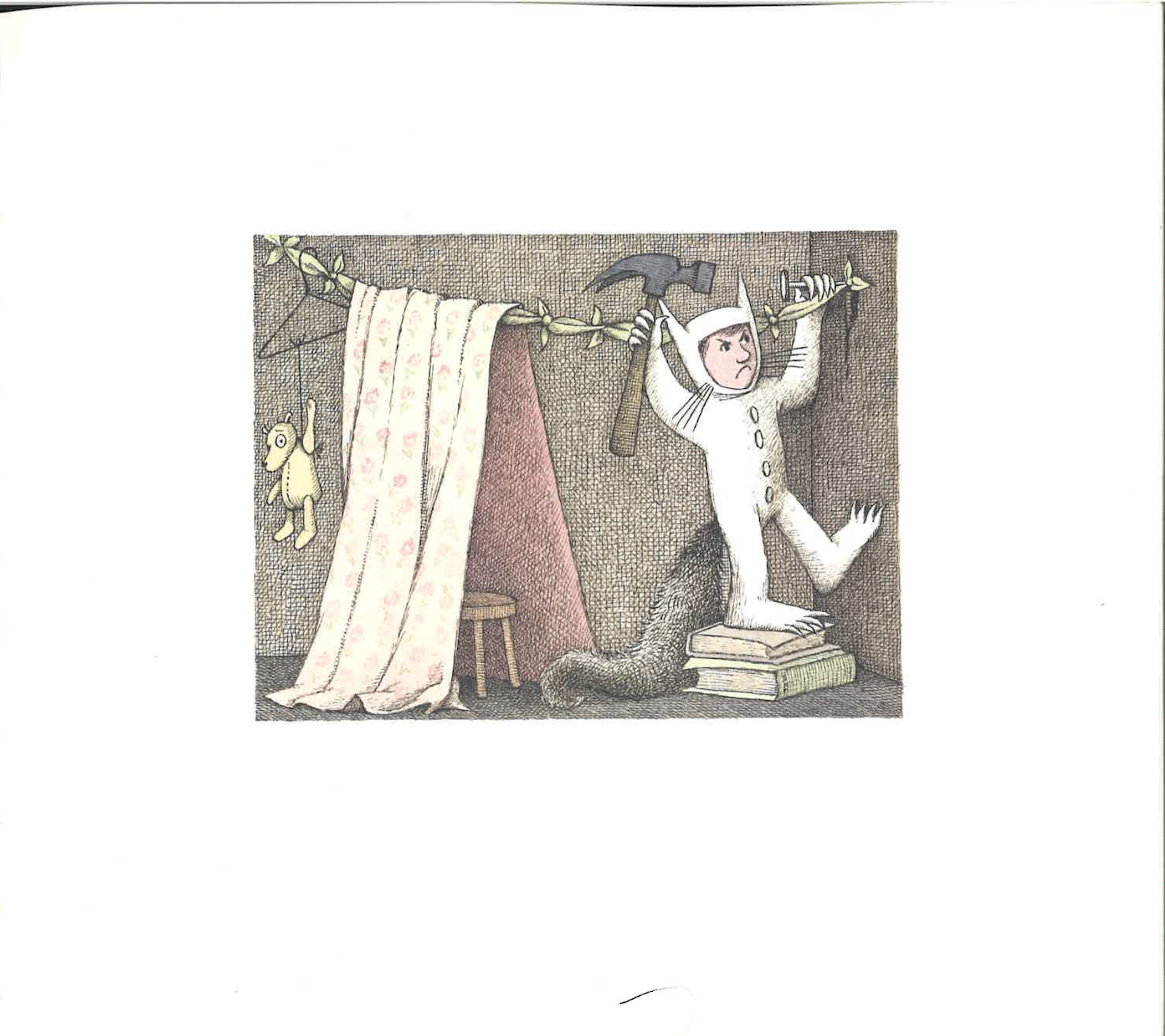
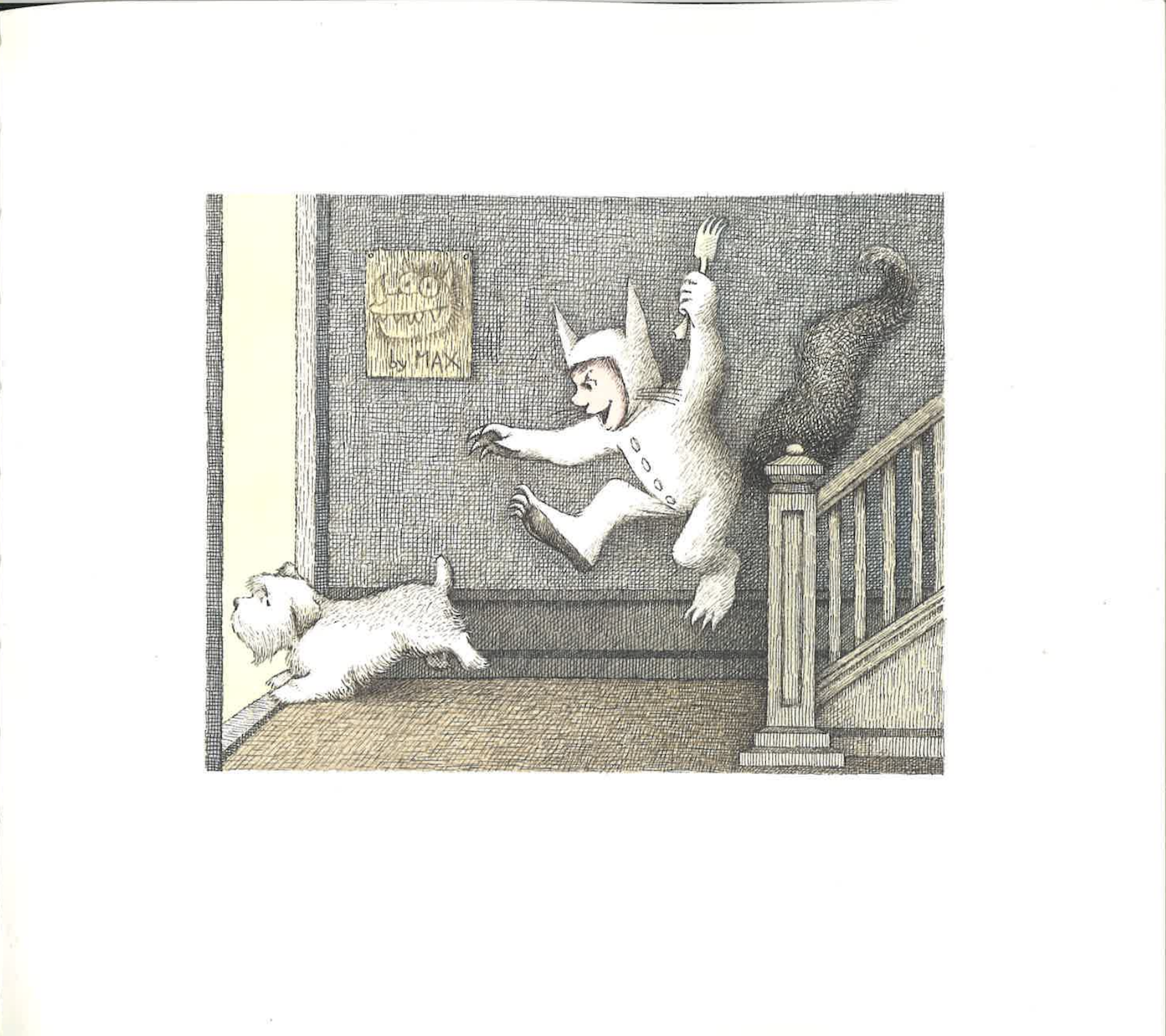


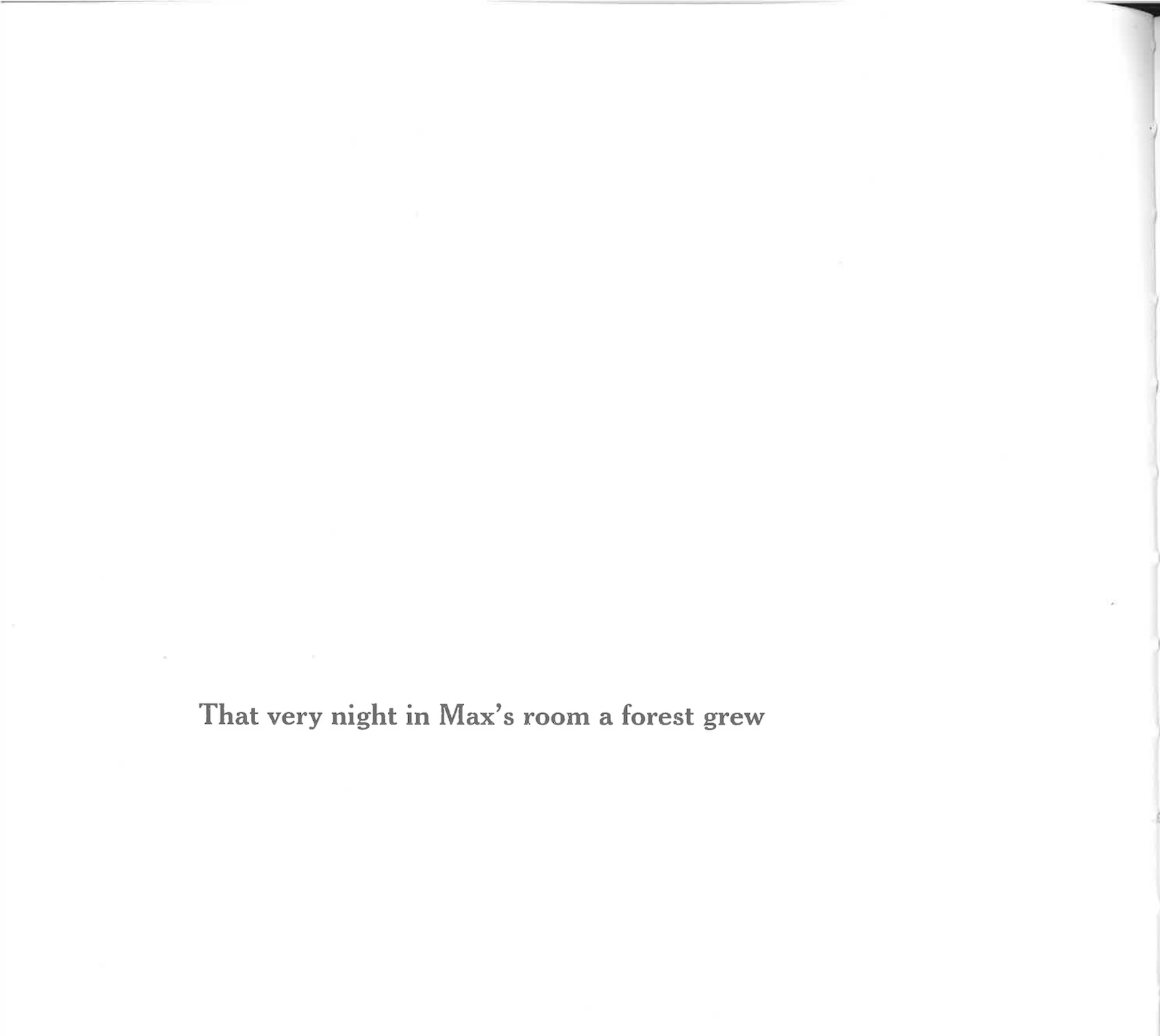
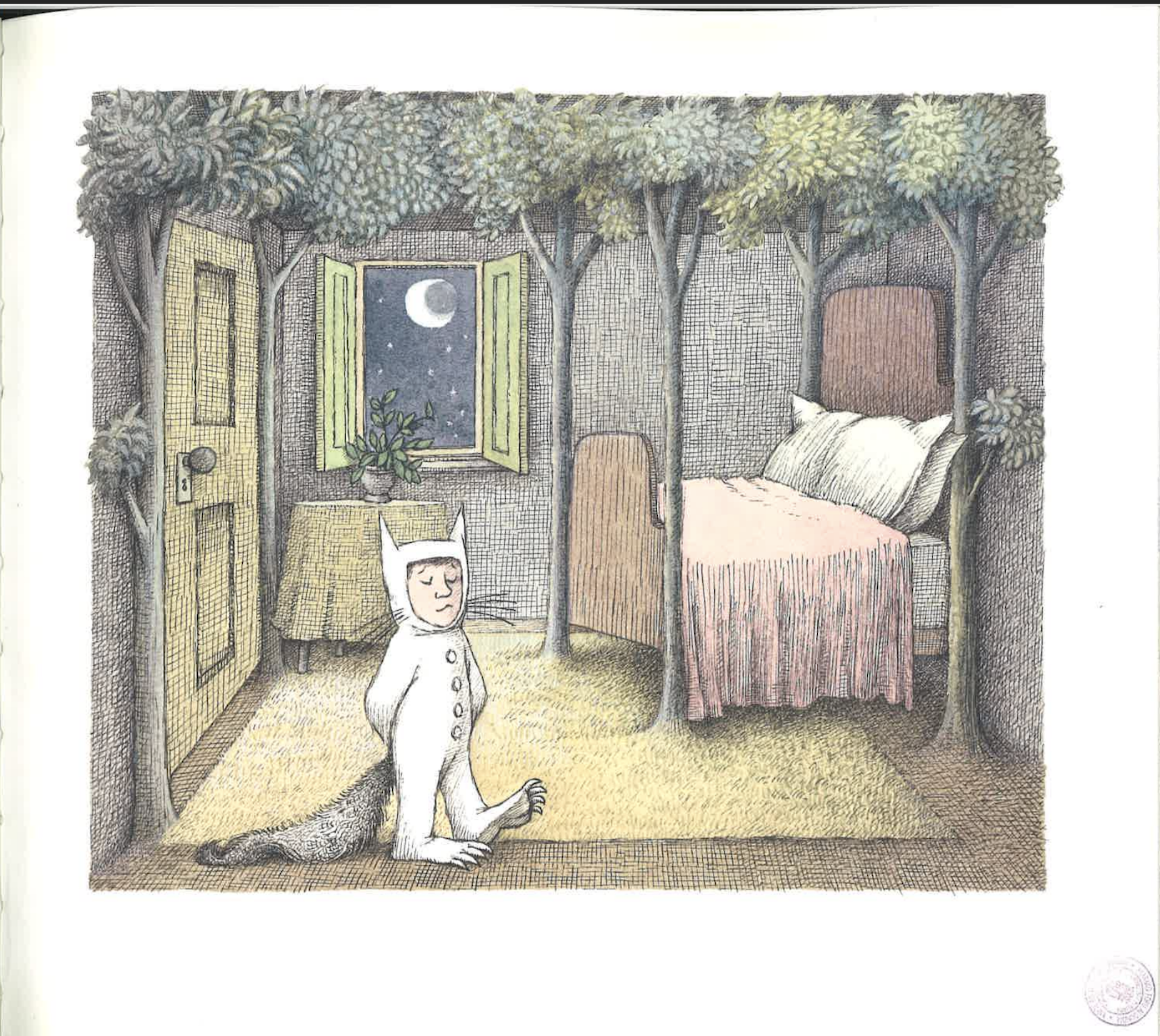

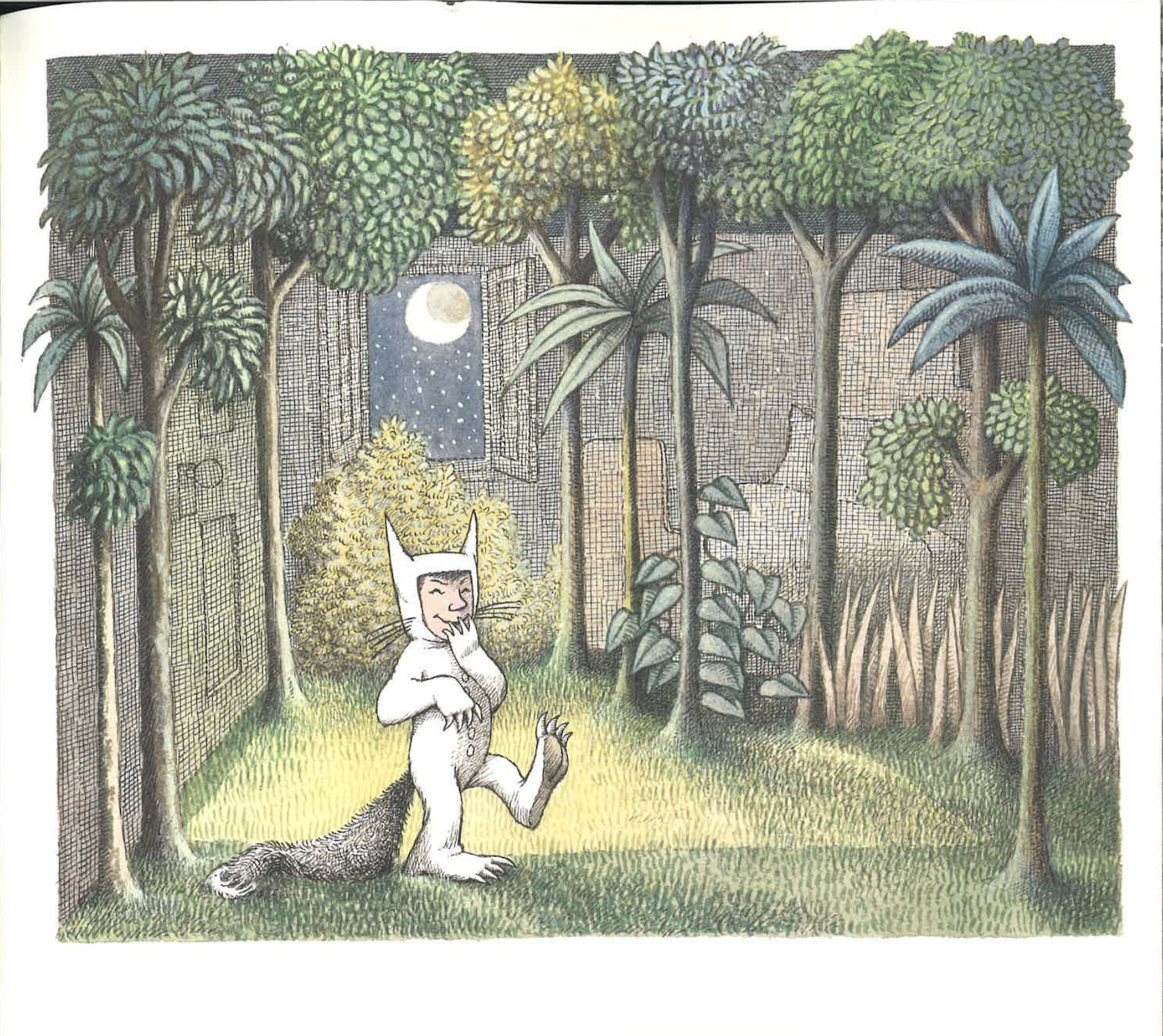


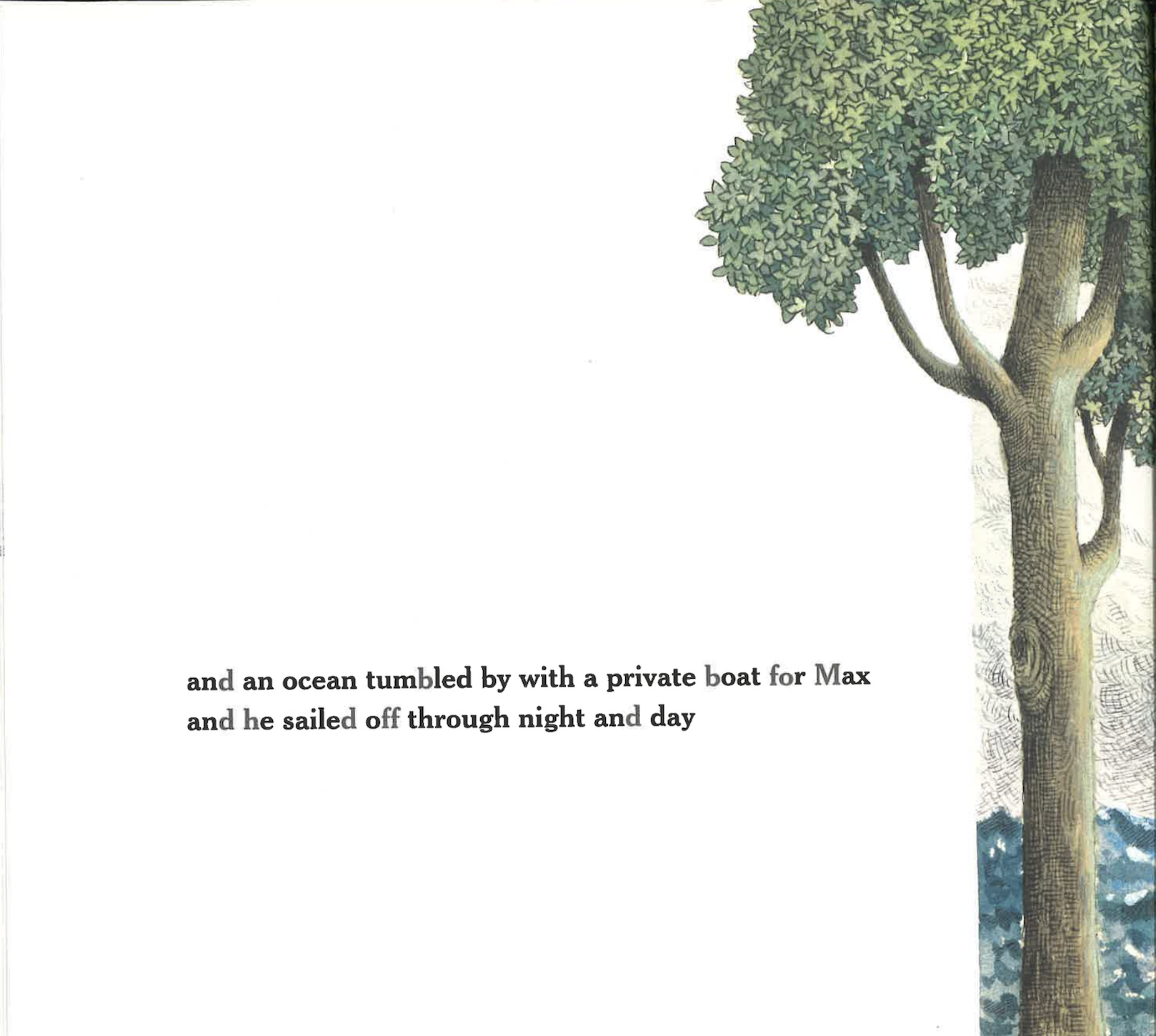
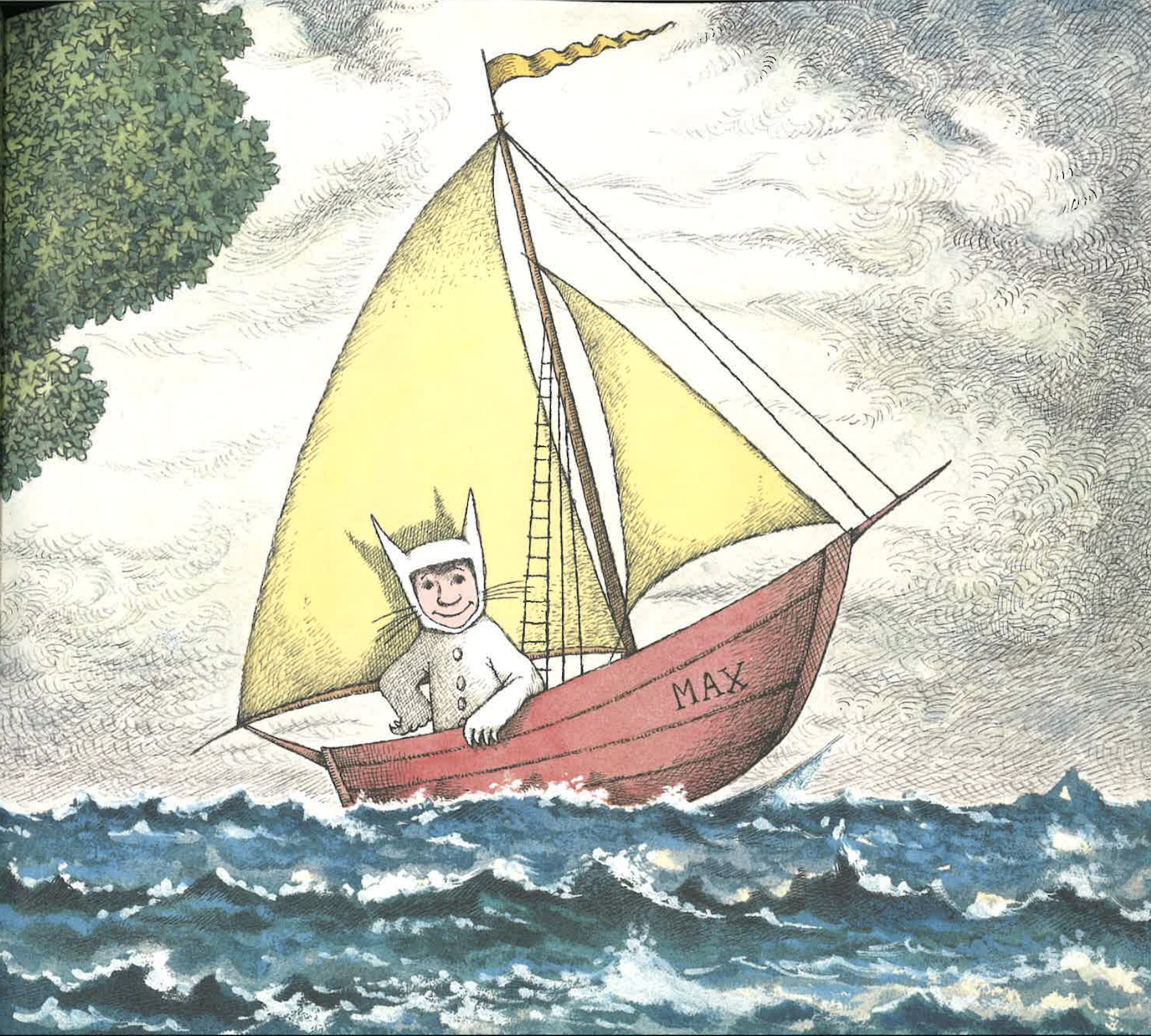
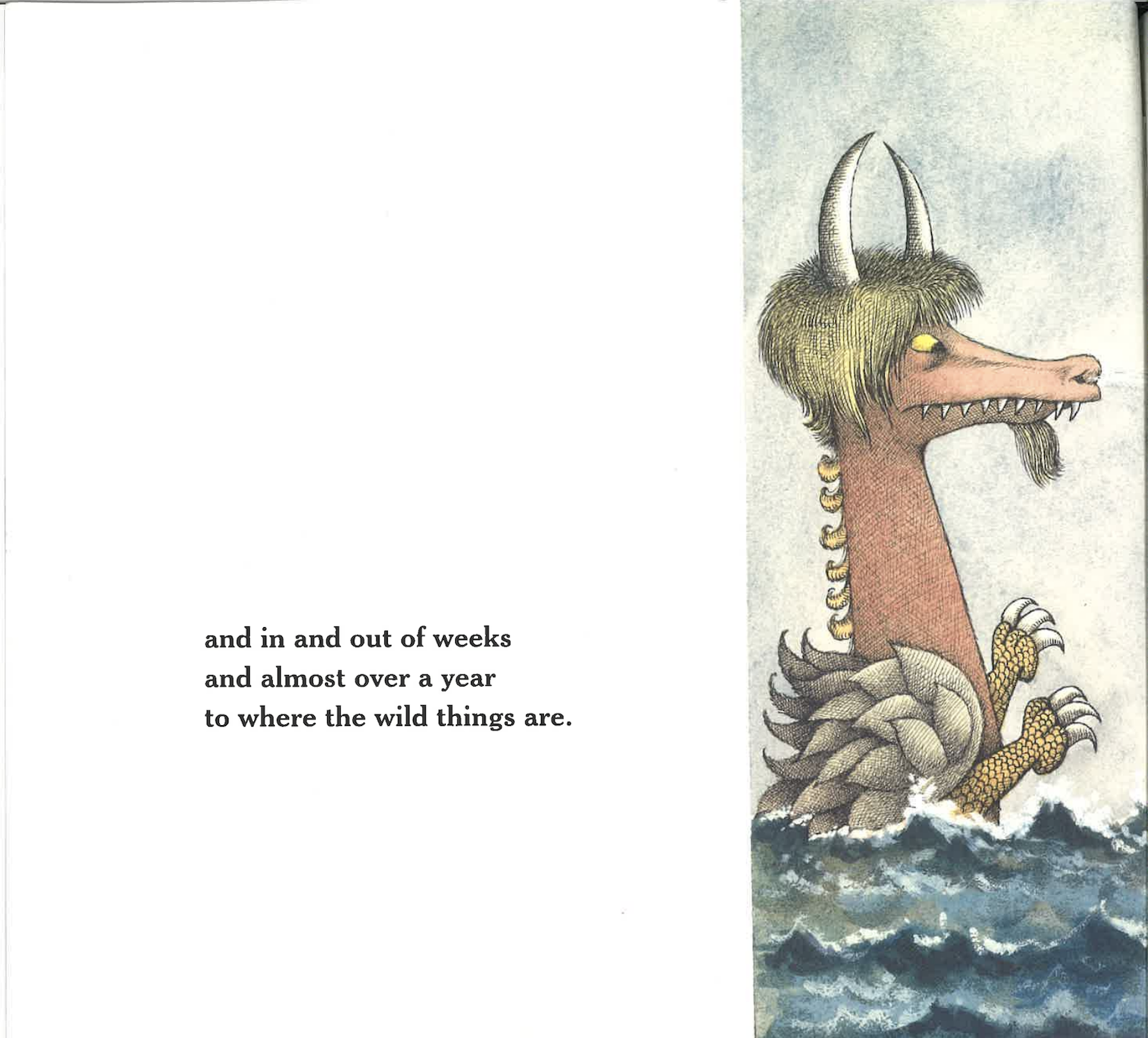
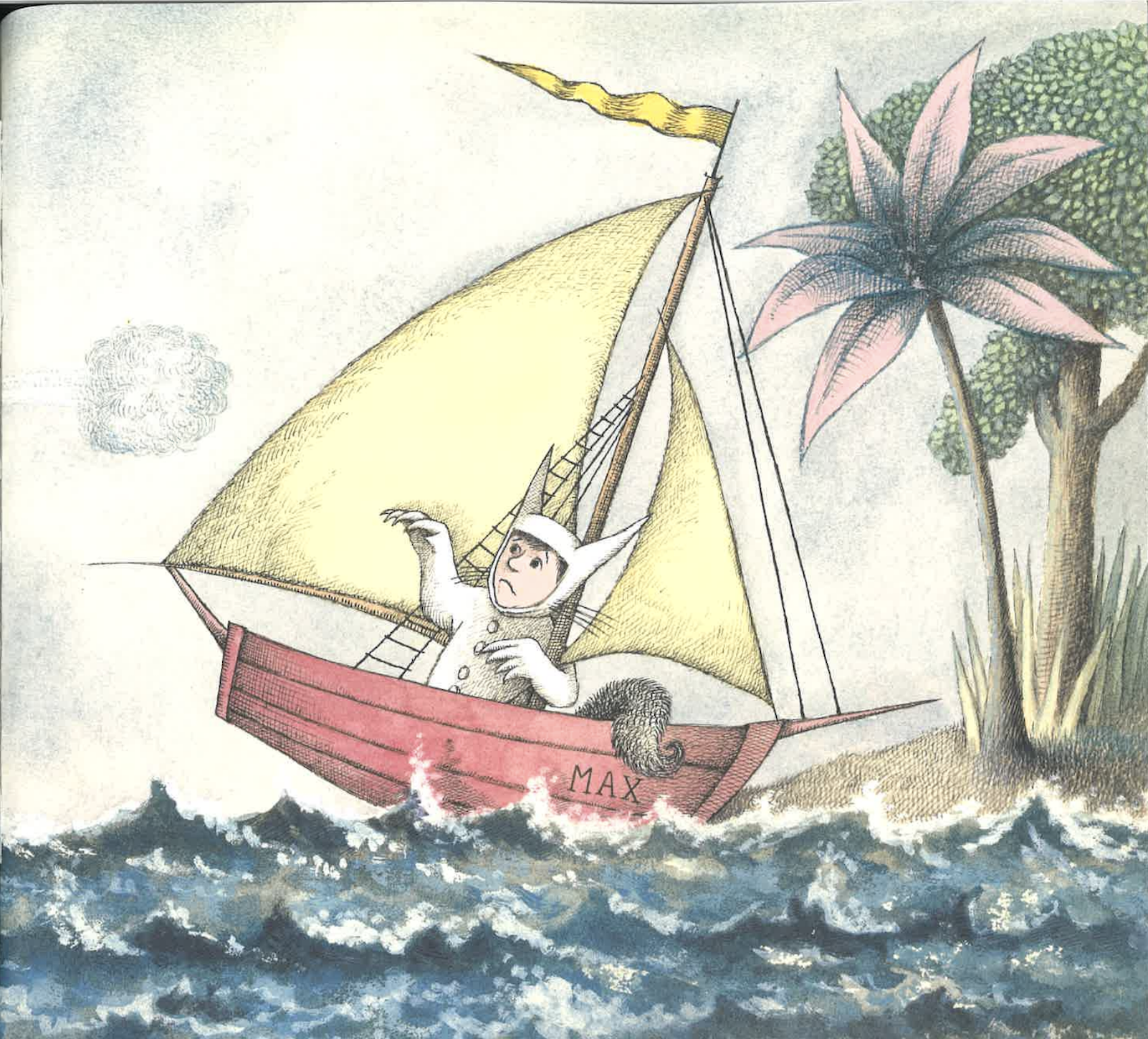
Swipe or tap through to see the progression!
You begin reading and find yourself drawn into it. Notice the way the illustrations pull you in, getting larger page by page, spreading from one page onto the next…
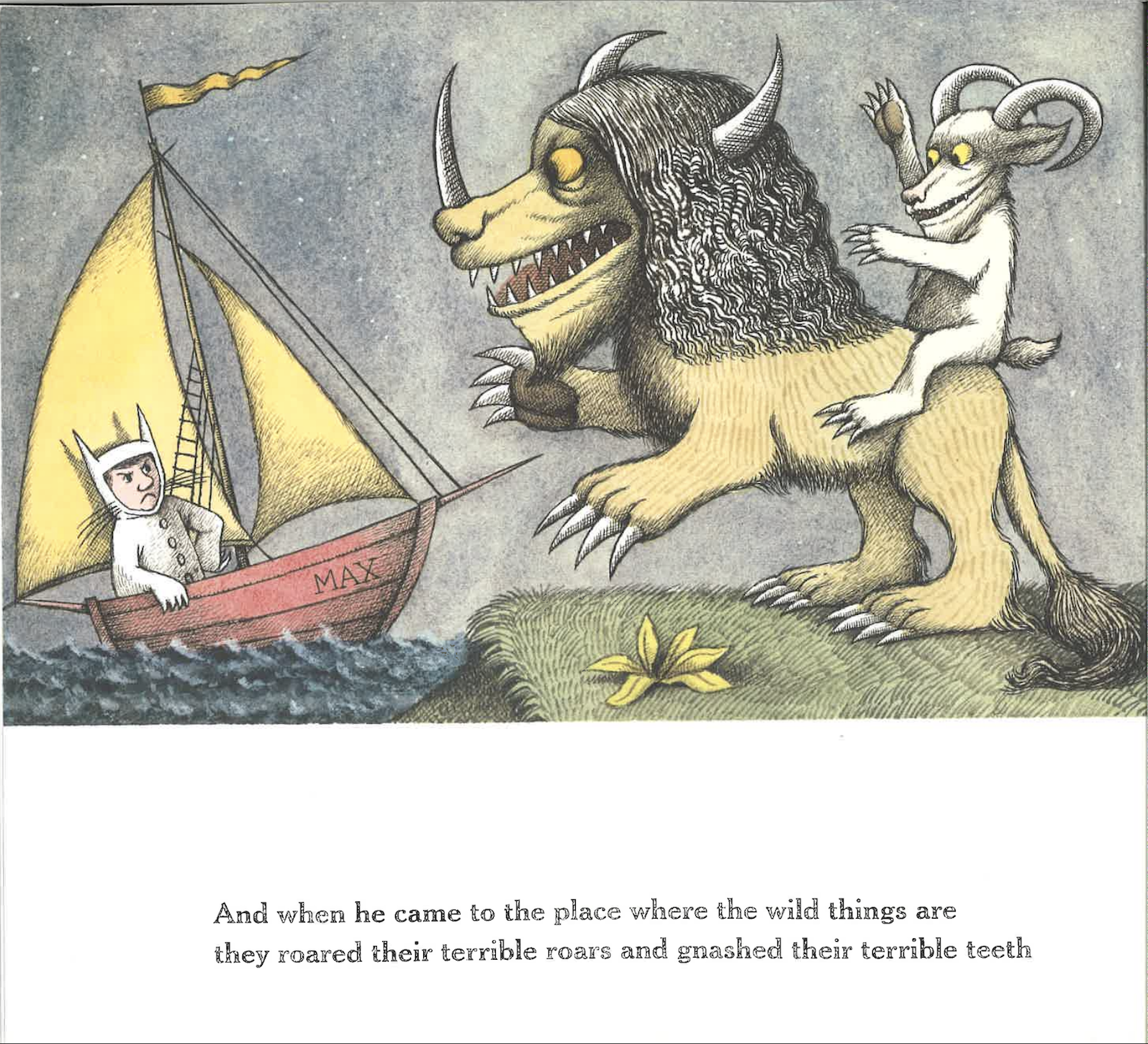
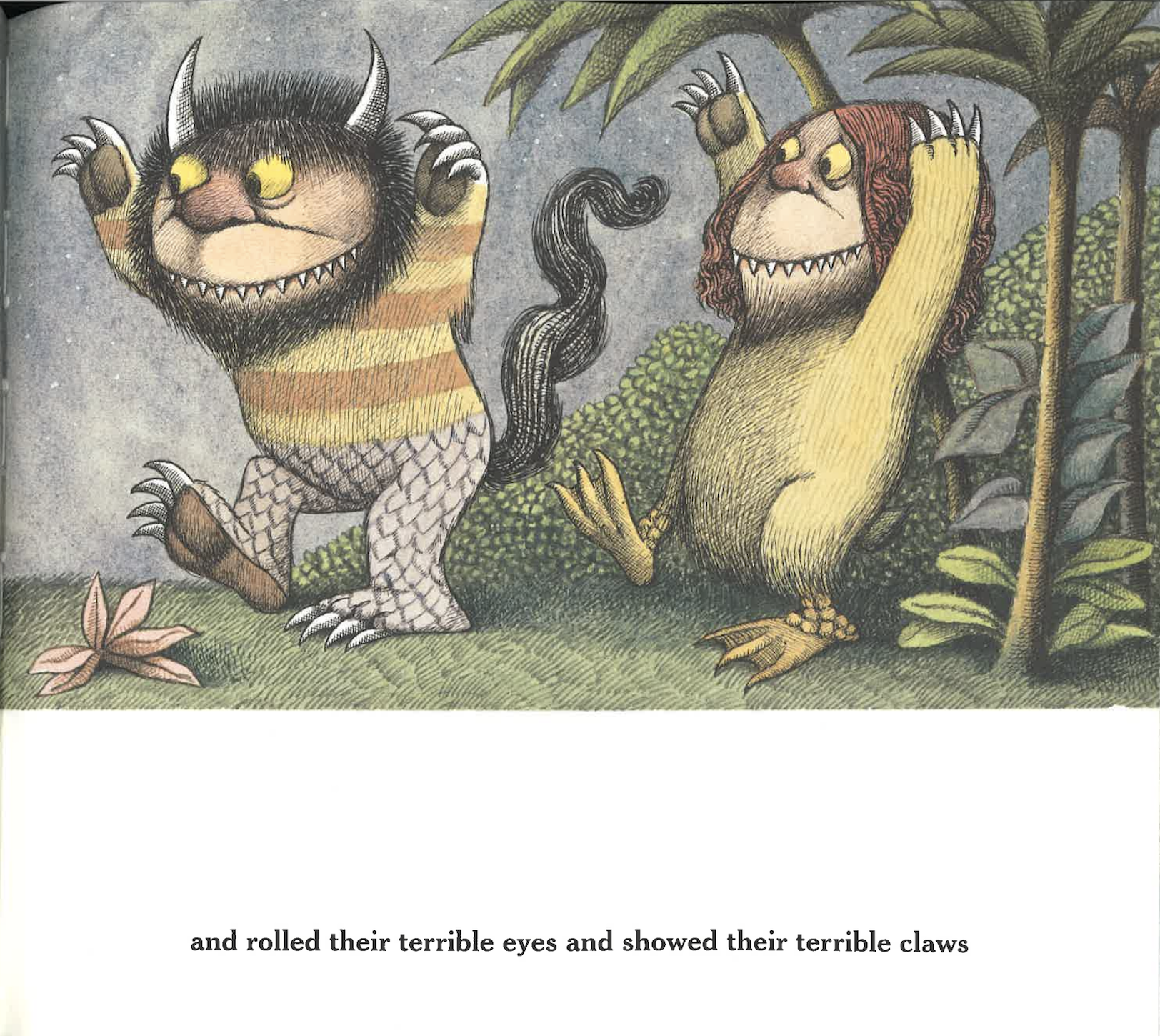
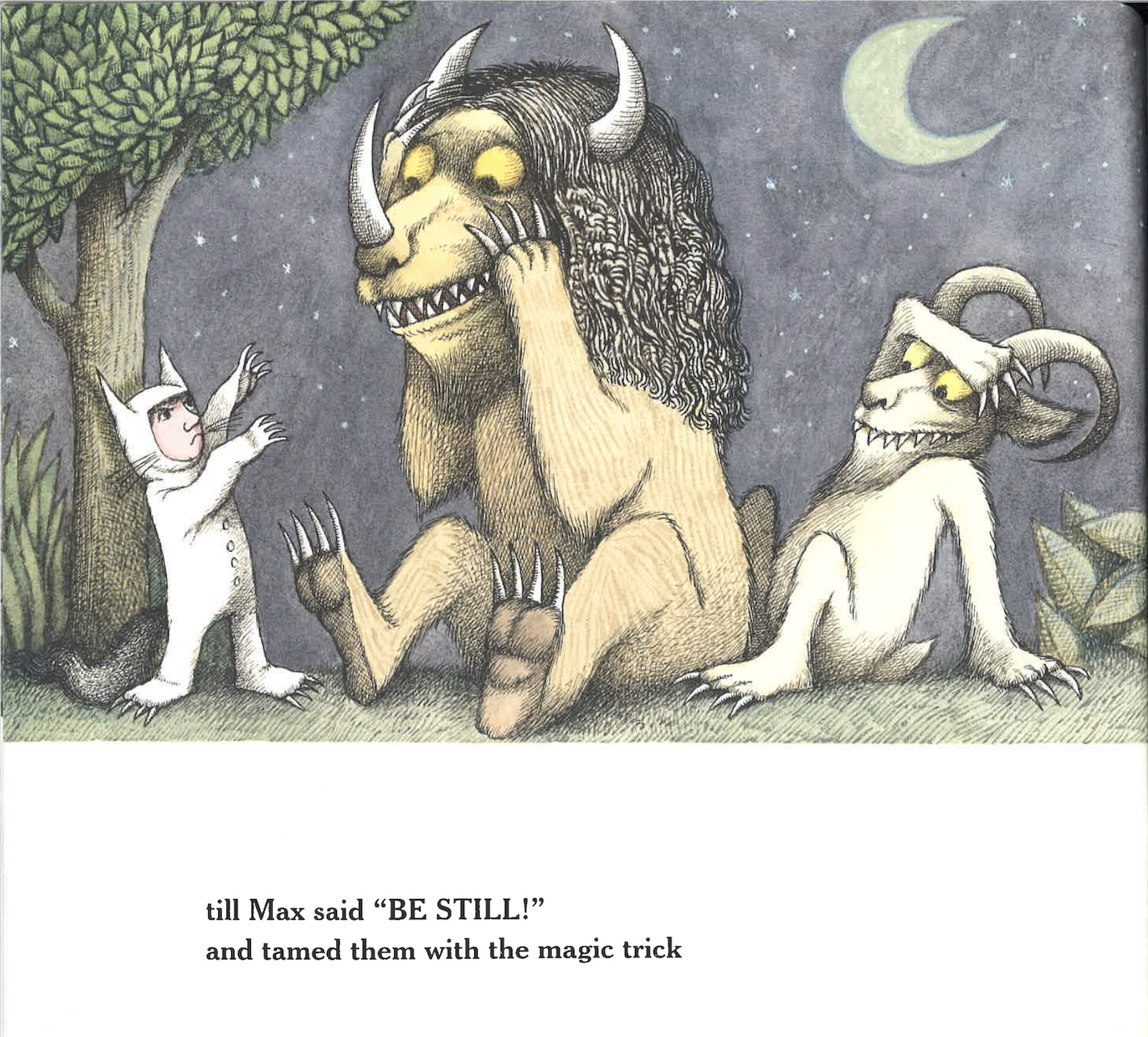
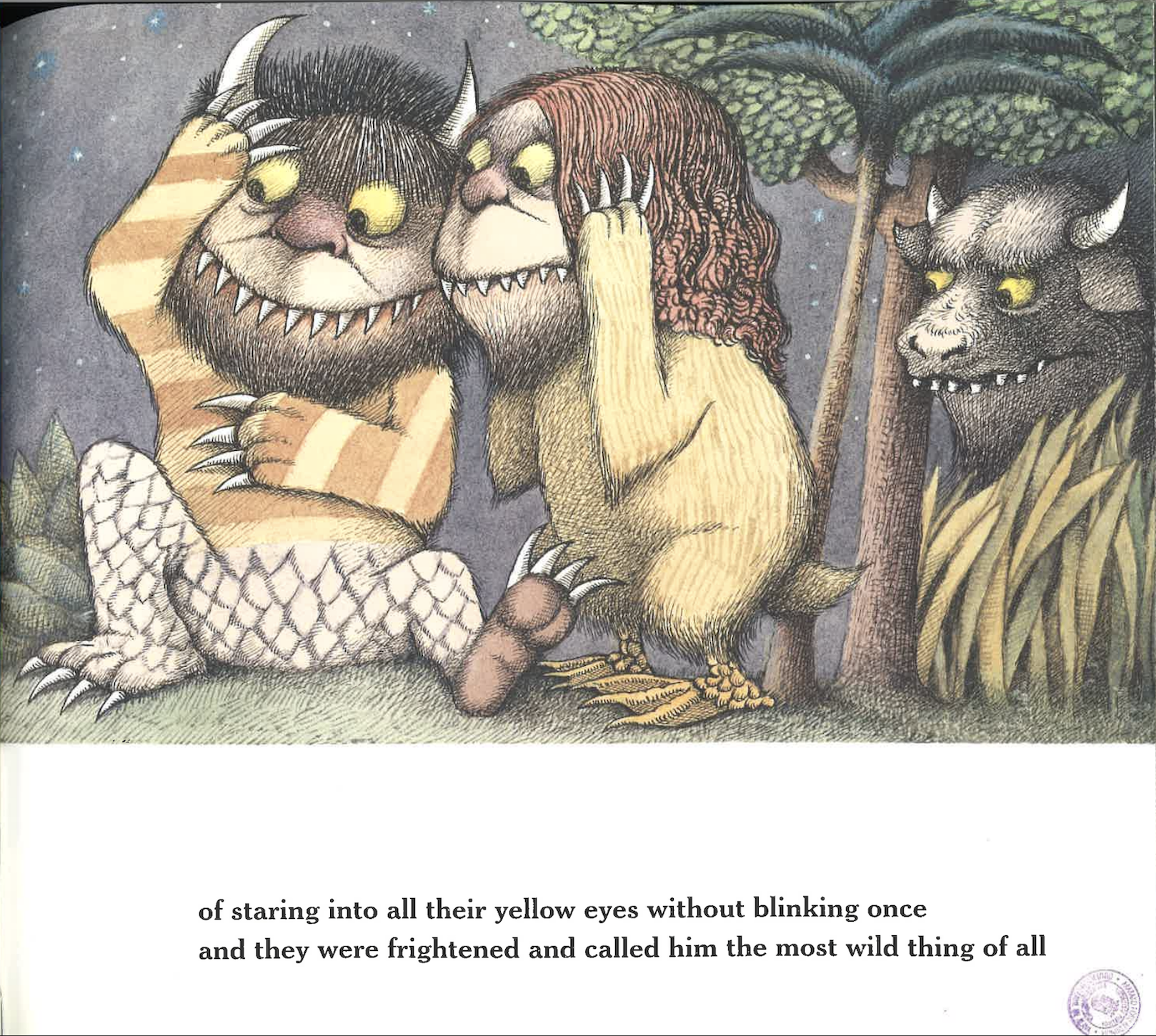
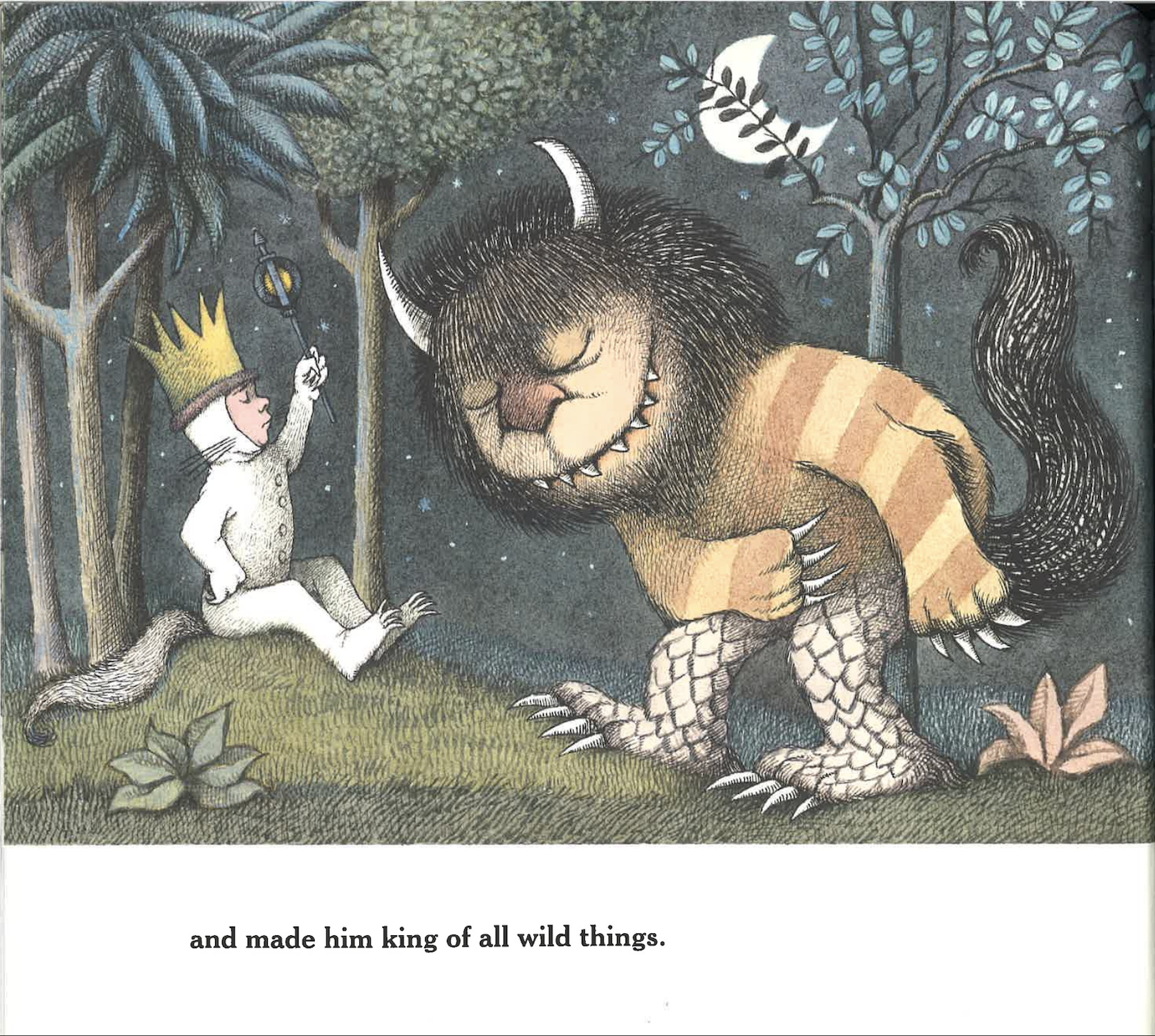

now they cover the whole horizon, now they’re creeping down toward the bottom, threatening to take over everything.
What is this book about? Max, a child, is terrible to his mother and screams at her that he will eat her up. And she, in retaliation, wields her own power and sends him to bed without his supper. And in his room he begins to retreat inside himself, into a fantasy world of his own making where he becomes king of a host of terrible monsters. Rejected because of his defiance, he is being swallowed up by his anger, until at the center of the book it becomes total and the wild rumpus starts.
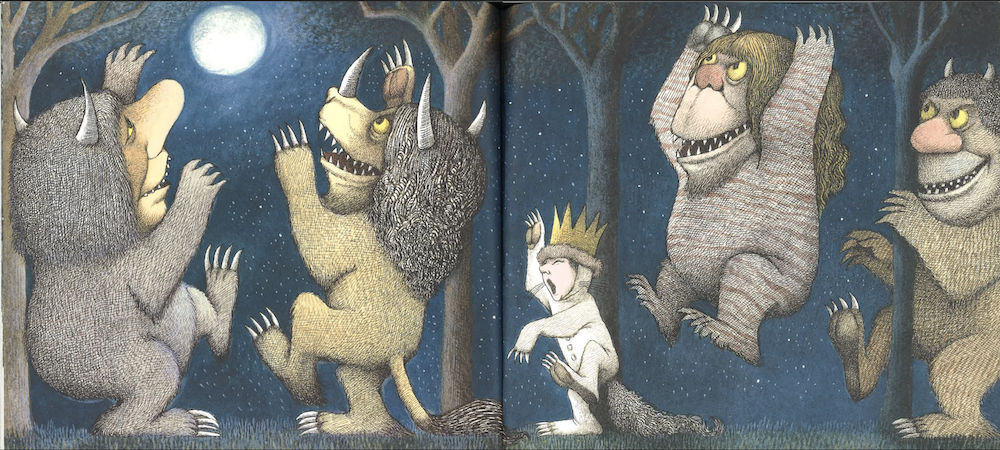
For three full spreads, the pages become only images, a wordless revelry in anger. No more thought.

It’s a romp in the heart of isolation.
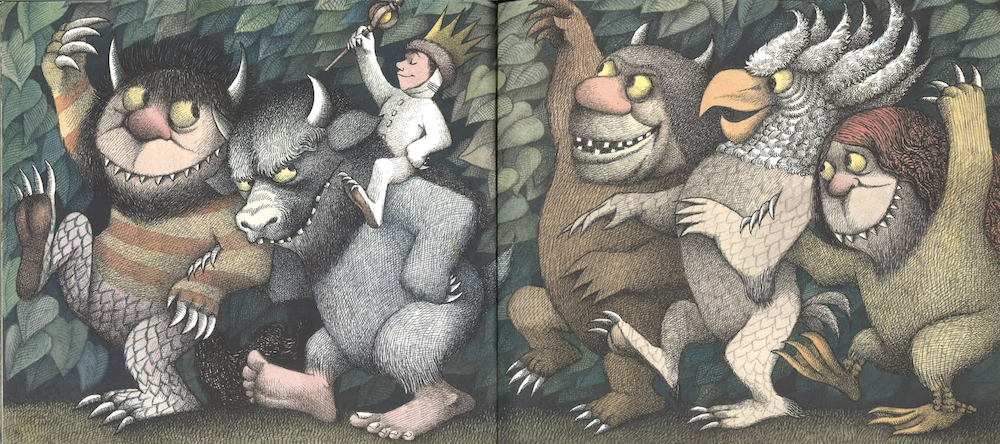
It’s a parade and Max is carried aloft by his wild things. Until suddenly Max calls off the whole thing. “Now stop!”

Look at him, the sadness on his face. He has gone all the way to the heart of his defiance and his anger and he has discovered that it is lonely. He doesn’t want to be king anymore. He wants to be where someone loves him best of all. And at the memory of his mom, the smell of her cooking fills up the atmosphere, and Max decides to go home.
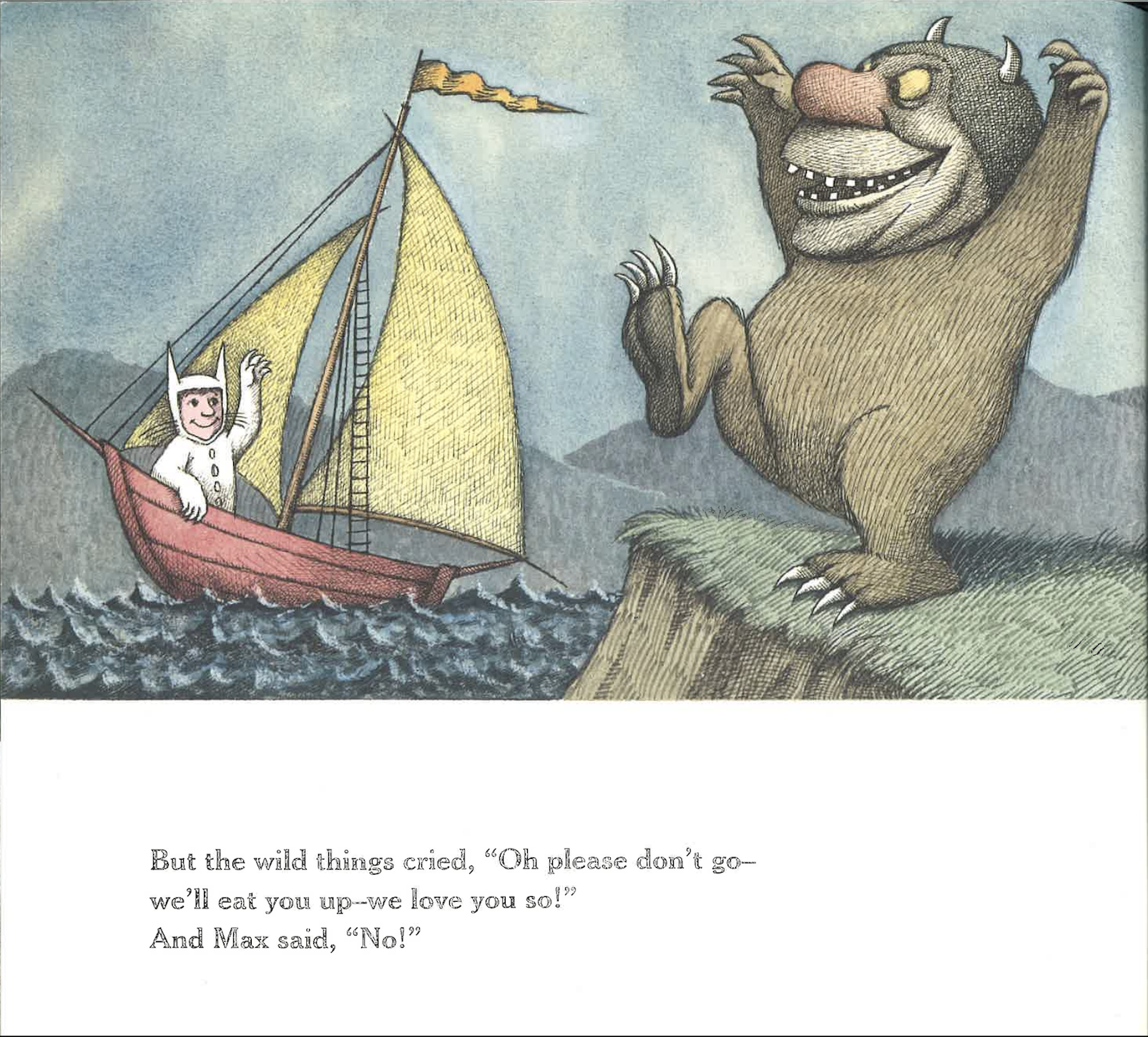
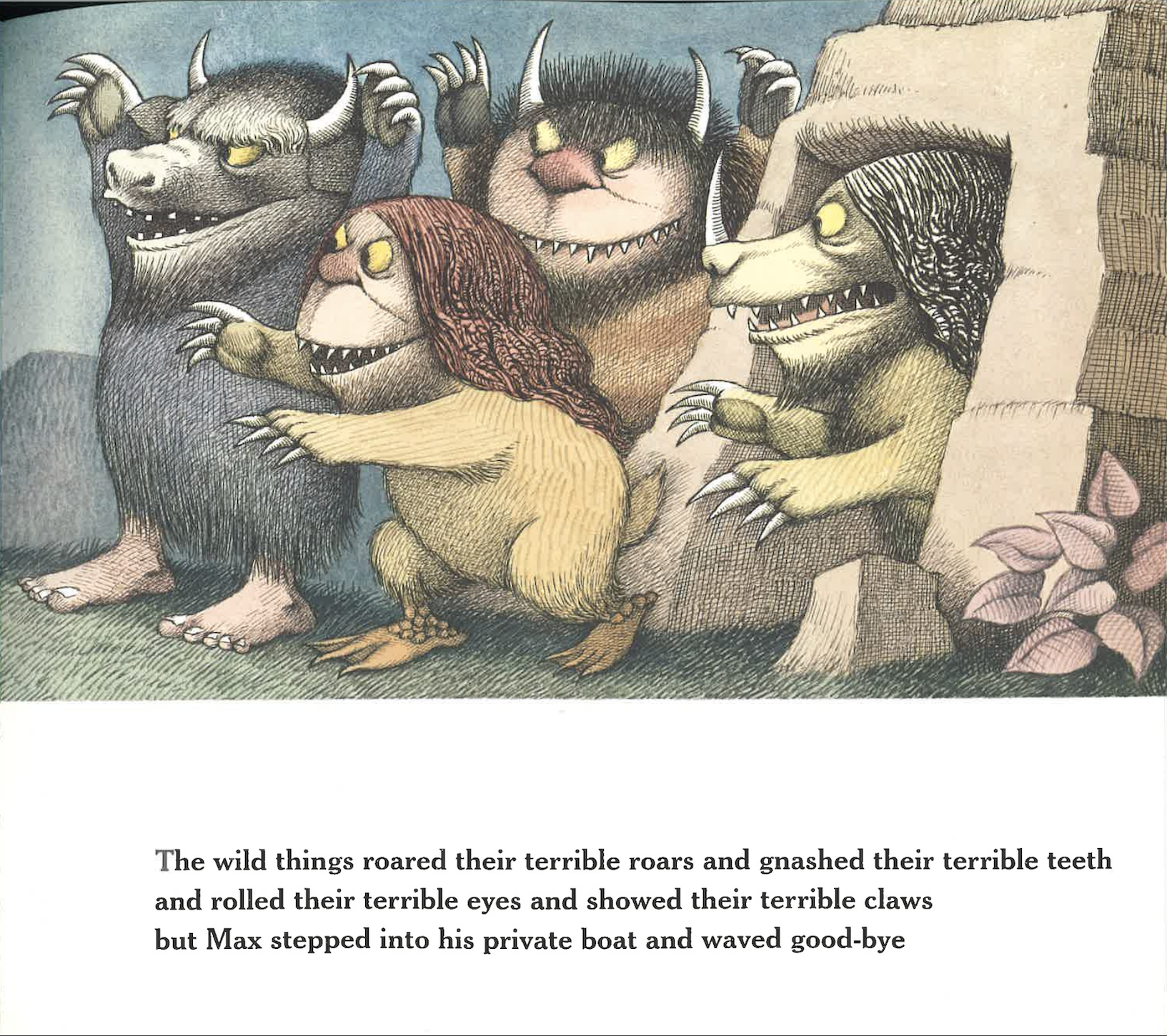
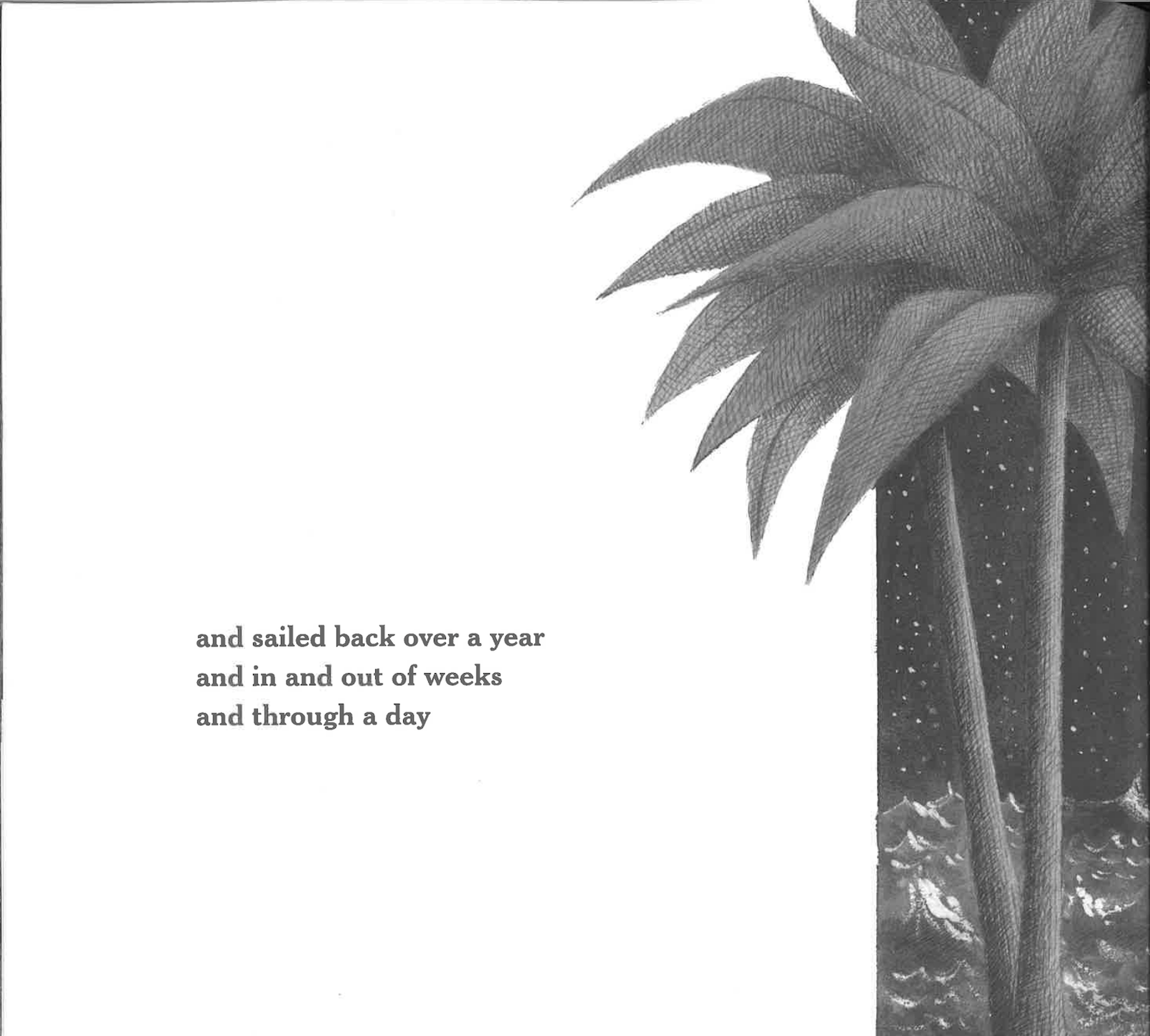
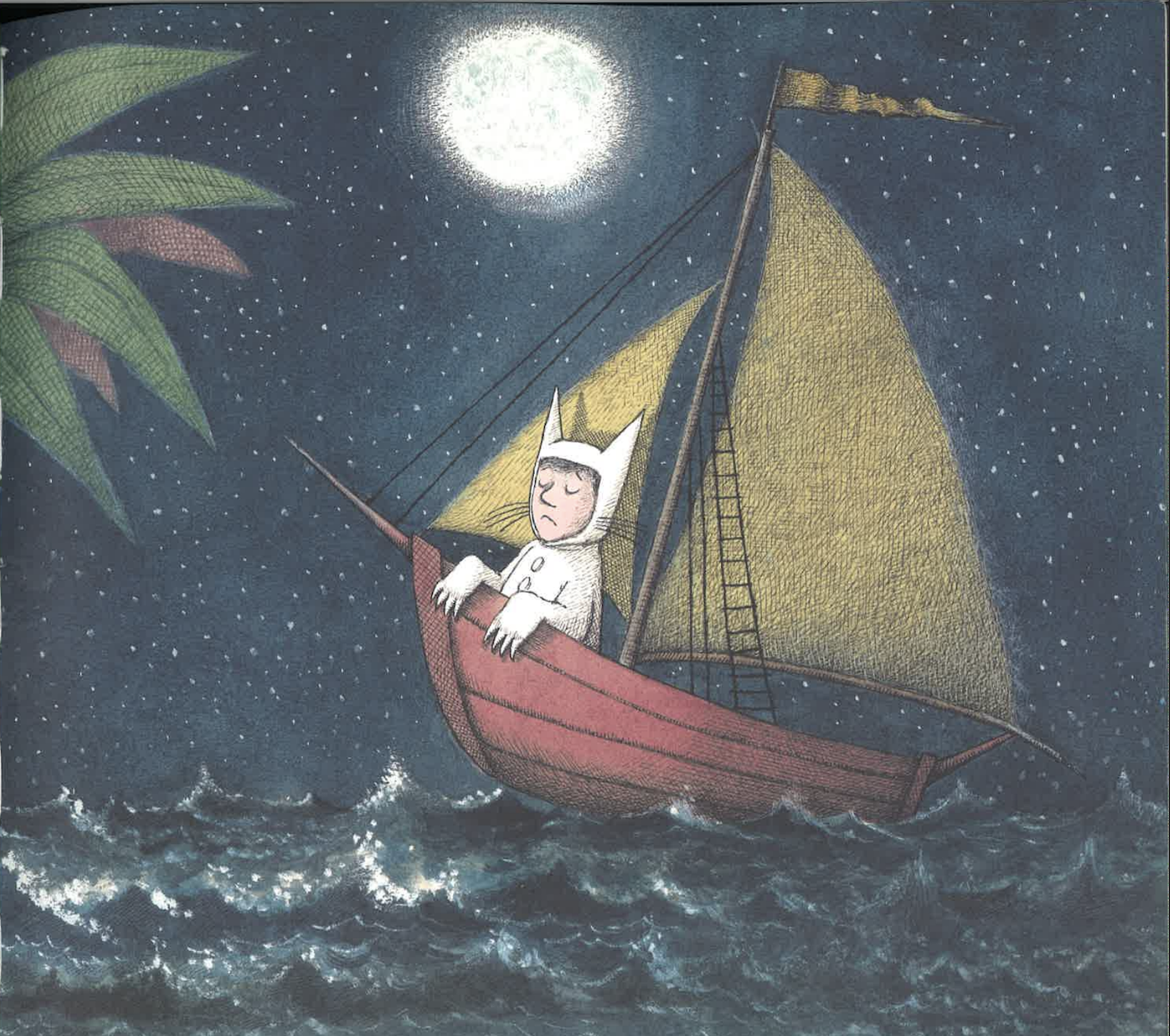

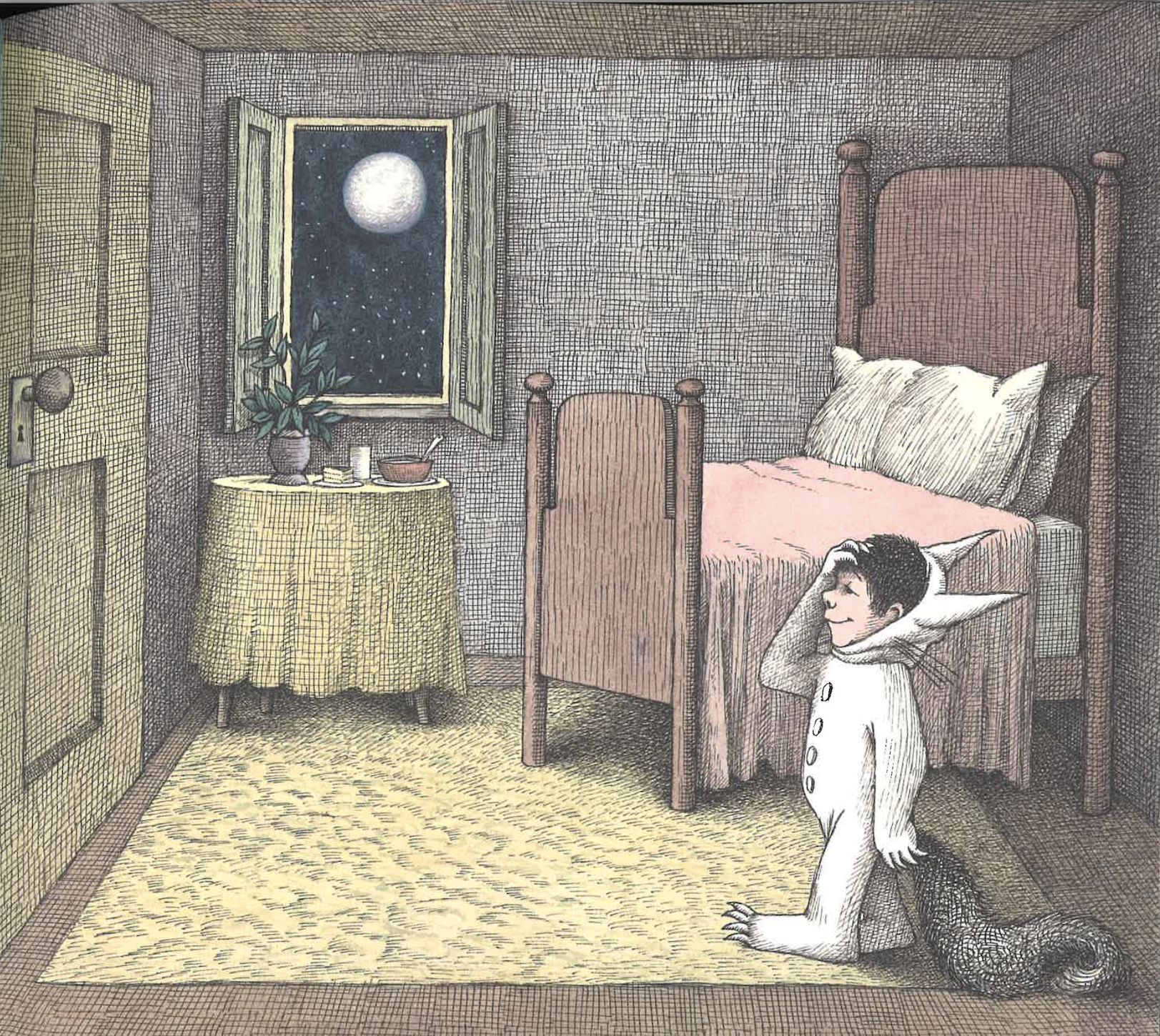


The wild things become who Max was at the beginning of the story, screaming that they’ll eat him up, but he leaves them behind. The pictures start to retreat. Back up, back across, until Max finds himself in his own room, and there is, after all, his mom’s soup, and we end on a page completely blank, imageless, wordless, fully at peace.
The DSM-V and Where The Wild Things Are want to bring the same thing in two very different ways. The DSM-V wants to tell you about oppositional defiance disorder. You are an observer. Your relationship to its subject matter is outside, detached. You become analyst and expert.
Where the Wild Things Are — which hopefully you see by now why it is demeaning (both to the book and to children) to dismiss it as merely a “children’s book” — is quite different. It doesn’t want to tell you about oppositional defiance disorder. It wants to pull you into an experience with it.
VIII: On Inerrancy (The Relationship Between Truth and Facts)
Do you see it? Do you see how sometimes what we’re reading in the library are sources of facts, reporting, statistics, diagnosis? But not always? Do you see the importance in trying to recognize the difference? Do you see how the standards for how ‘’true” or reliable a text is actually change, depending what section of the library you’re standing in? And how sometimes questions about facticity or historicity are the wrong questions? Whether there actually was a rare autographed photo or asking coordinates of the island of the wild things would be completely beside the point.
And can you prove these stories are true? Do you need to?
And do you see how there are deeper truths that need to be communicated in nonfactual ways?
This is because, while facts are always truthful, the truth is not always factual.
It often transcends factuality.
Hear me: I’m not advocating automatically, blindly jettisoning the possibility of facts in the Bible. I’m not saying the Bible never has any historical basis. (There’s no first locking of eyes with your baby without those eyes being a certain size, certain color, certain dilation, without there being a birthday and a baby to begin with, all of which must be transmitted with data.) Nor am I saying that the Bible never wants to communicate facts to us. The Bible, like Pickler, contains sections that are more like periodicals and history books.
And so if the Bible in the Wall Street Journal section intends to make a claim, say, that a snake at one point developed the capacity to speak (by whatever means) and indeed did speak, I will humbly try to bring myself to believe it. I am not a priori contra miracles. (See my sermon on Mark 6 and my wrestling with my belief in the healings and exorcisms of Jesus.)
But, through a process of learning what kind of a thing Genesis is — perhaps more like Where the Wild Things or a Scott Cairns poem — and learning then what else it might intend to claim in what way, if I come to believe that it’s asking me not to believe that a serpent spoke but rather what it said, then I will do the same and humbly try to bring myself to believe that. It also takes faith, you know, to believe that people are made with dignity and purpose and value and belovedness, as partners of God, rather than as the gods’ detested slaves and enemies, as the other stories floating around the time of Genesis claimed.
But, living in a modern, post-enlightenment, scientific age as we do, where many believe that the only thing we can really trust in is verifiable and falsifiable data, many Bible defenders want to ignore the Seussian nature of the Bible and subject the text to a tyranny of empiricism. Provability. It all must be one perfectly accurate collection of facts or else how can you believe any of it?
Like what I heard in that lecture from Ken Ham. This was failing to see the Bible for the library it is to the highest degree. (It’s also bullying and fearmongering, and it should really stop.)
But it’s not all one thing! And it’s worth noting here that when it comes to the Bible, not only is the whole complex, a library of different kinds of things, but the individual books can be, too. So it’s not especially helpful to always think of any given text as being either factual reporting or else as “just a story.” In his book The Poetics of Biblical Narrative, Meir Sternberg proposes thinking of the biblical authors as having three considerations in their writing, each at play to different degrees with the others.

These are
History (they want to communicate what happened)
Ideology/Theology (they want to communicate convictions or beliefs about God, about empires, about morality, about human nature, purpose, value, etc.)
and Aesthetics (they want to communicate with whatever degree of a particular style)
Think of these as your equalizer on your stereo — base, mid, and treble.
They’re not simply on or off. Biblical authors can turn them up and down to different levels to create the quality of sound they want.
Sometimes in the Bible it feels like that fader for history is louder and the aesthetics are quieter, as in the royal lineages in Chronicles, or the catalog of legislation that is Deuteronomy. Sometimes it feels like history and ideology are both up, like in the way 1 and 2 Samuel serve as a critical retrospective on maintaining political power through violence.
But I also believe there are times where the history is turned way down and the theology and aesthetics are turned way up, as in the book of Jonah, which feels more like The Onion than Fox News to me. Yes, Jonah was a historical prophet as 2 Kings tells us, just as Donald Trump is a president, but in the book of Jonah he behaves in entirely absurd, unprophetic ways and throws tantrums to positively comedic effect. When it says that even the cows repented, we’re supposed to be laughing.
And so on and on for the whole Bible, piece by piece, book by book, which means that yes, I can believe the Gospels tell me accurate historical details about the life, death, and resurrection of Jesus even if I also believe that Genesis, perhaps, tells me non-scientific details about the creation of the universe, Mr. Ham.
“So, Reed, uh, is the Bible inerrant?”
We’re not asking if it’s inerrant. Because the Bible doesn’t say it’s inerrant. And because how can John Coltrane be inerrant? We’re asking if it’s true. Which requires asking what section of the library we’re in. If we want to understand what this is saying we will also need to ask how it is saying it.
And so then, having rightly studied that, if we discern that it’s not a matter of testable, verifiable facts, how do we know if it’s true?
IX: Don’t You Leave Him, Samwise Gamgee (On the Power of Stories)
So, again, it’s not that facts are always irrelevant. But at times they are impotent. We have to reach for language that goes deeper, beyond data and facts. Think of it not as anti-factual but as suprafactual, a mode of expression communicating truths that can’t be told by just giving us the facts.
The first time I watched The Lord of the Rings with my boys, when it came to the end where suddenly Sam learns that Frodo intends to leave forever to the undying lands because he has suffered a wound from which he cannot heal, and the two embrace, realizing that after all they have endured together on their quest to destroy the ring, this will be the last time they will ever see each other.
And we’re sitting there watching and Briggs says, “Dad I’m gonna cry.”
And I say, “Ok, uh yeah, yeah that’s right. That’s appropriate. You can cry.”
And he says, “No. I know what’ll help. Pushups.”
And he drops and starts pumping out pushups right there on the living room floor.
Why?
Is there anything historical or factual about The Lord of the Rings? And yet, is it true?
I think it is, but how do I know? Admittedly, this is trickier to answer. How do I know that forgiveness is better than bitterness, or love truer hate, or that my mom loves me? Is it purely a matter of synthesizing the relevant data?
Buechner said this about preaching and knowing the truth of the Bible.
And finally let him preach this overwhelming of tragedy by comedy, of darkness by light, of the ordinary by the extraordinary, as the tale that is too good not to be true because to dismiss it as untrue is to dismiss along with it that catch of the breath, that beat and lifting of the heart near to or even accompanied by tears, which I believe is the deepest intuition of the truth that we have.
The truth isn’t always something you arrive at by weighing all the evidence and arriving at the correct verdict dispassionately, objectively, like a juror. I believe there really is something to be said for intuition, imagination, conscience, and heart as apparatuses for apprehending the truth, right alongside reason.
Can it go awry? Of course. We can misunderstand and be deceived, but doesn’t that go for intellect, as well? Or if you think that we can wander into darkness via stories but somehow not via facts, consider the way some lawyers can string together purely factual statements in order to create a false picture of their clients. But yes, given what I’m saying, “Is it true?” does become a more complex question to answer (it always is), but then a far more engaging one, too.
The truth of The Lord of the Rings — of love and loss, of wounds and healing, of good and evil — is what confronted Briggs that Sunday evening through that story, and it was so powerful he didn’t know what to do with it, and he wanted to escape it. It happens to all of us. Sometimes even when we read the Bible.
G.K Chesterton is reported to have said it this way: “Fairy tales are more than true — not because they tell us that dragons exist, but because they tell us that dragons can be beaten.”
Or Barth, again: “Madam, it doesn’t matter whether or not the serpent really spoke; all that matters is what the serpent said.”
This is why we shouldn’t ever say something is just a story. Why we can’t think of poets and artists and composers and musicians as simply the interior decorators of the room of life, adding some visual interest and pop with their pretty songs and motivational stories while the reporters and scientists get on with the real work. Their creative works are incredibly powerful vehicles for conveying truths that cannot be told any other way.
And what’s more, I believe that the sort of truth they tell, the sort that can’t be told with mere facts, is precisely the kind of truth we’re most desperate for, the only kind powerful enough to transform us in the depths of our hearts as God wants to. Spreadsheets and Rubick’s Cubes and historical surveys all have their place, and are certainly more appealing to some than others, but all the same, while they can scratch an itch in your mind, I do not think they can reach down and transfigure a soul.
So, what if the book of Job is more like Where the Wild Things Are? An experience with God amidst suffering rather than a diagnosis of it? What if the song of Moses in Exodus is something like Scott Cairns?
Even if they aren’t purely factual, could they still speak to the events of our lives with a word that is alive and life-giving? Could they be theopneustos?
Imagine, then, the damage we do to ourselves in trying to reduce the entire Bible to a solo-facto mode of communication in the way Ken Ham says we must, reading everything like a DSM-V statistical diagnosis of the character of God. The meaning and power become flattened. And we, knowing all the facts, become god, an ironic reversal of the intended effect of the bible’s storytelling, which is at times that we should be put in a position of uncertain hearer who is being asked above all not to know but to participate and trust.
Not only can an entire collection of DSM entries on God or Wall Street Journal entries on the actions of Israel not account well for its own ambiguities and tensions; neither can it speak to our deepest needs, yearnings, and intuitions. In other words, it cannot fully transform us.
I have to wonder: by insisting so adamantly on and arguing so boldly for the Bible’s perfect, scientifically testable, historically verifiable facticity at every point and/or only ever reading it as such, are we actually suffocating it, making it less than theopneustos? Are we sucking the life out of it?
X: The Architect Is At Home (What’s The Point Of All This, Then?)
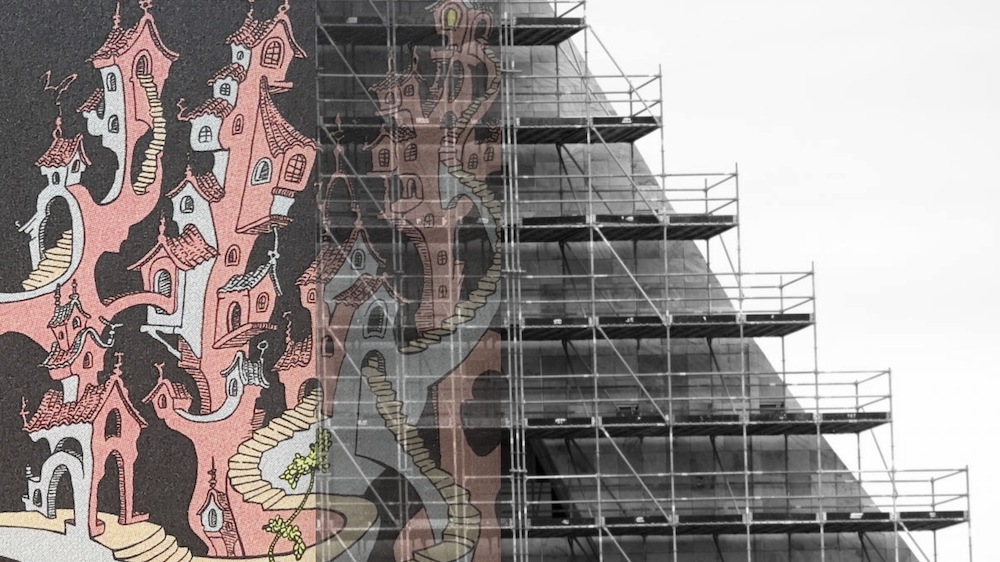
And now, finally, to bring us back to our scaffoldings and our Seuss Town — what is the point of all this? What is the point of study, or argument, of picture-painting and song-writing? What is the point of such a long lecture as this?
Partly I want to reassure you that the Seussness of it, the messiness of the Scripture, the parts that befuddle and confuse and dismay, is a feature, not a bug. The Bible’s deep truth and many wonky features are part and parcel to one another. They’re not something to be wiped away, but wrestled with. Therein we find that the Bible’s capacity to encourage, uplift, and inject joy into us is also increased.
And yes, I want to try to give you something helpful in positing what I believe is a better way of approaching the Bible.
But hear me: simply having a better approach, a more robust hermeneutic (for you Bible nerds) is not worth much all on its own. Even if our scaffolding is the “best,” our interpretations the soundest, on their own they are still outside the thing.
The whole point of this structure and the scaffoldings we build around it is to actually get inside and encounter the Architect who makes his home there (and who, it seems, left some of us a long time ago to be the builders). This is the mystery and joy and confounding nature of not simply studying or reading but of letting ourselves be poured into this text as it is poured into us. It is living. It is active. We don’t just learn about God as a subject of study; we can actually find Him at home.
So, if we want to live life with God, to become one with him as Christ is (which in the end is the only truth) the Bible cannot remain for us a curiosity only. Treating it as a feature in Architectural Digest won’t do. We’ve got to use the best scaffoldings and rope ladders we can to climb our way up and in, to encounter God and be encountered by Him.
The project of interpreting and deciphering it has at this point lasted twice as long as it took to create it, and I doubt it will ever end. It is a path we are never done walking. But it’s got to be done for something, to get to someone.
So, yes, it is inspired, but not necessarily like that. And yes, it is true, but not always in that way. Inspiration isn’t an argument you make against a skeptic to convince them. It’s not something that must be acknowledged a priori, before the Bible can do anything with you. It’s a quality that is recognized from the inside, by those who’ve come to take a room there, who experience the way God speaks in it to their own lives, their loves, their failures, their grief, their labors.
Like when you hear one minute about the fear of the Israelites fleeing from their former masters, and the next minute about their grumbling that they had it better in captivity.
Or about how Cain’s confused jealousy led him to kill his brother.
Or about the intimate stillness between just Moses and God alone there on Mount Nebo as God spoke him into death.
Or about Amos’s God’s raging frustration that his people wouldn’t stop oppressing the poor for a little extra money.
Or about Hosea’s God’s inability, despite having had it up to here, to give up on them.
Or about God’s patience with Jonah who’d rather be dead than live in a world where the people who murdered his people would be forgiven.
Or about the soul-crushing cries of the psalmist who was driven so far from home that he couldn’t even make music anymore.
Or about the ecstatic cries of Peter, frantically, recklessly splashing through the tide to get to the Jesus he had rejected.
Or about the words of Paul to his flock about the inescapable love of Christ, and grace, and freedom.
Or about Jesus, the Christ, about whom we can never hear enough, who is before all and after all, the true word of God.
We could go on and on. And we will, God willing, breathed into, inspired, made alive by this Seussian, impossible, magnificent, life-giving, truth-telling, living book.
Receipts (Works Cited)
I should start by acknowledging that the Seuss Town analogy began with my friend Danny Wesley in KC. He laid down the foundation; I just added my own annexes and flourishes to it. I am grateful and indebted to him for such a brilliant idea that has spawned so many helpful thoughts.
The Seussian illustration is indeed by Dr. Seuss, found here — Seuss, Dr. Did I Ever Tell You How Lucky You Are? Random House, 1973.
Buechner, Frederick. “Doctrine.” Wishful Thinking. Harper & Row, 1973, pp. 19-20.
Buechner, Frederick. Telling the Truth: The Gospel as Tragedy, Comedy, and Fairy Tale. HarperOne, 1977, p. 98.
Cairns, Scott. "September 11." Slow Pilgrim: The Collected Poems, Paraclete Press, 2015, p. 229.
"Oppositional Defiant Disorder." Diagnostic and Statistical Manual of Mental Disorders, 5th ed., American Psychiatric Association, 2013, pp. 462–466.
Sendak, Maurice. Where the Wild Things Are. Harper & Row, 1963.
Sternberg, Meir. The Poetics of Biblical Narrative: Ideological Literature and the Drama of Reading. Indiana University Press, 1985, p. 44.
“Terrorists Destroy World Trade Center, Hit Pentagon In Raid With Hijacked Jets.” Wall Street Journal, 12 Sept. 2001, p. A1.
"Trump's Name to Appear on Coronavirus Stimulus Checks Sent to Americans." Fox News, 15 Apr. 2020, www.foxnews.com.
“Trump Seeks To Stimulate Economy By Sending Rare Autographed Photo To Every American.” The Onion, 19, Mar. 2020, www.theonion.com.
